Hello again, Reader.
I’m a big fan of the BBC programme QI, and I recently watched an excellent episode from their K Series called “Knits and Knots.” (Watch it here.) On this episode, Stephen Fry and Alan Davies, along with Ross Noble, Sue Perkins, and David Mitchell, delve into the fascinating world of knitting and knotting, as well as other topics beginning with a silent ‘k’.
Now, I knit quite a lot, but mostly, I knit to relax. There’s something soothing about the repetition, the gentle clickety-clack of the needles, and the memories of my grandmother teaching me to knit as a little girl that makes the whole process very calming for me. As a result, however, my knitted projects tend not to be especially complex or adventurous. But’s that’s more about me than it is about knitting itself. Because knitting can produce some pretty incredible things. “Such as?” I hear you asking, Reader. Well, read on!
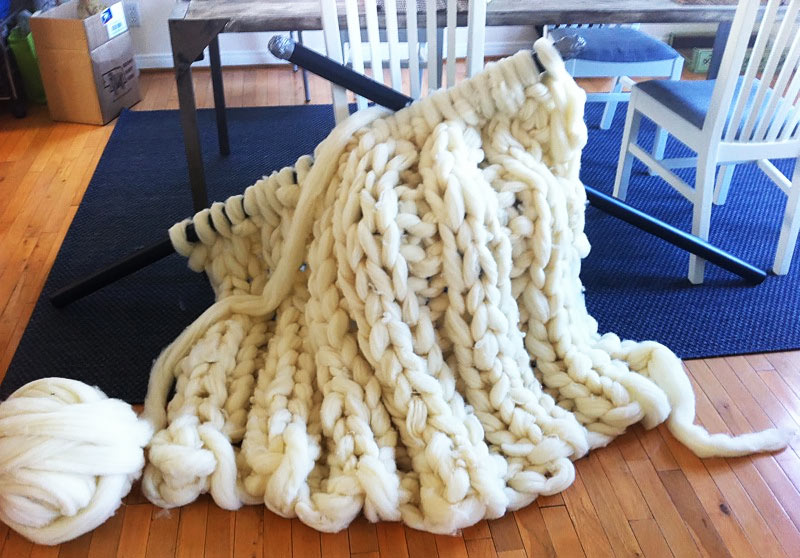
Go big or go home!
A growing trend in the world of knitting is large-scale projects. Giant needles, arm- and hand-knitting, and enormous yarn results in gargantuan examples of knitted objects. This process often focuses on the texture of the material, because the individual stitches are so large. It also shows off the construction of the knitting piece itself. Knitting, by the way, is a series of inter-twined loops made from a single yarn or strand.
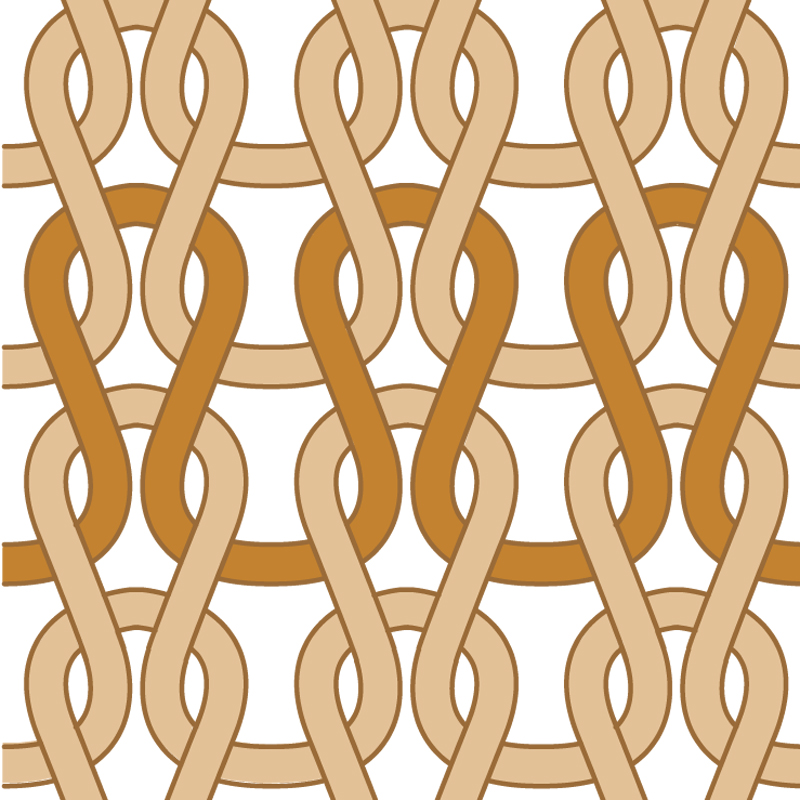
Actually, we can find this kind of construction in other, unexpected places. The loops of knitting are related, perhaps distantly, to the hitches and bends of sailors and the outdoorsy set. Speaking of sailing, early fishing nets were made by hand, using a series of connected partial loops, even though their present day descendents are more likely to be machine-made. Looks suspiciously familiar, no?
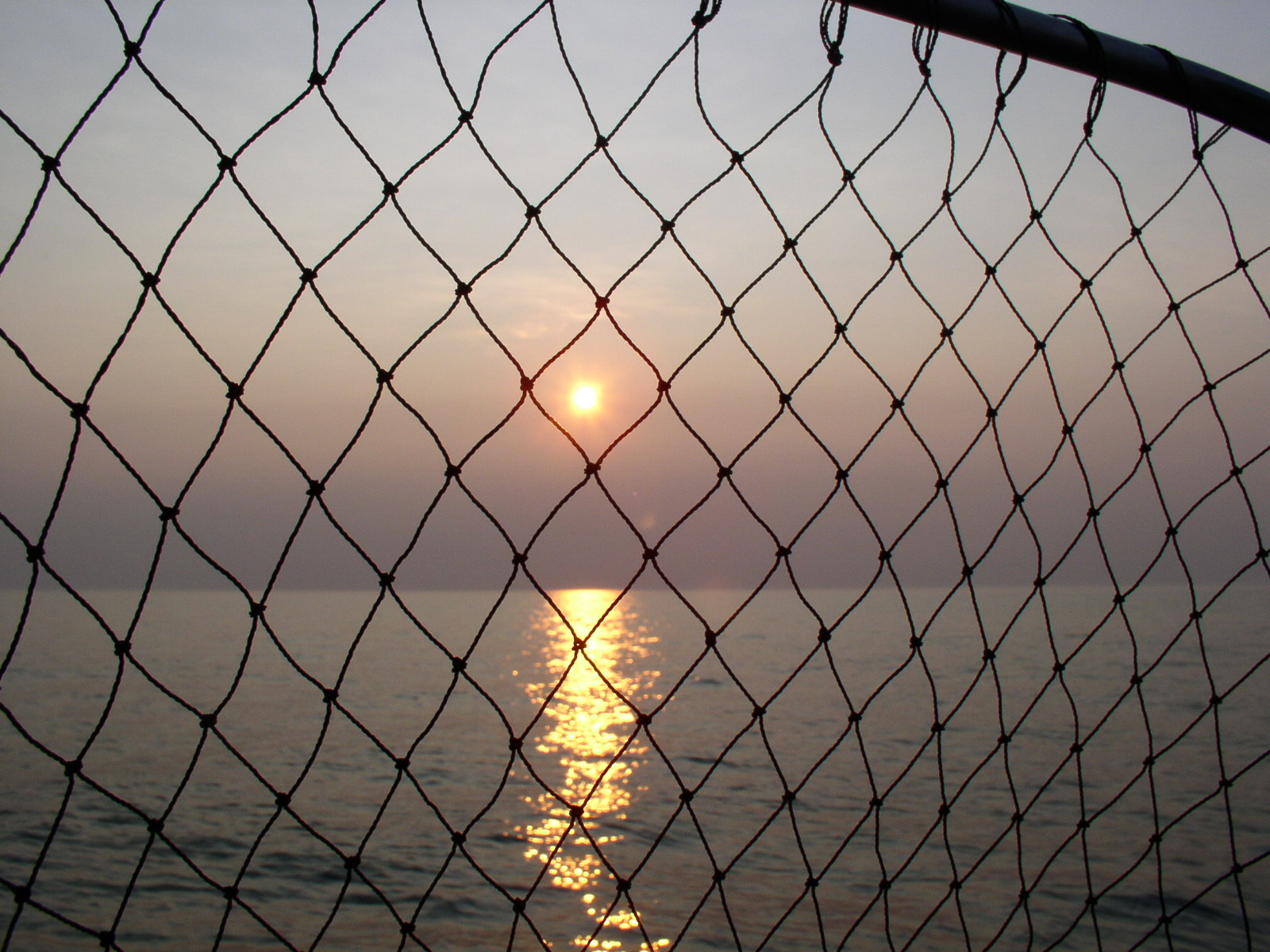
Catching some sun.
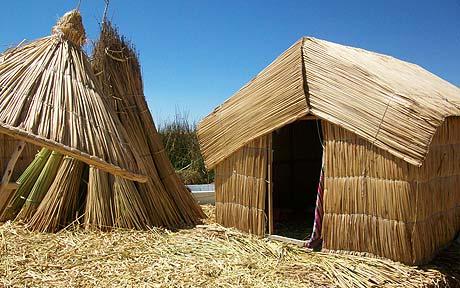
We can find other examples of knitting on a big scale besides giant needles and fishing nets. The islands of Uros in Lake Titicaca, Peru, are floating reed islands, which have been ‘knitted’ by their inhabitants. Apparently, the texture of these floating islands is so unique that people who live on them find walking on dry land very difficult. Not only have the reeds been built up to create spaces for people to live on, but their houses and buildings are also made of reed. A significant part of their environment is textile: it’s pretty nifty!
There are many outside of the Uros islands, however, who feel that they aren’t getting enough knitting in their lives. Enter guerrilla knitting, also known as knitting graffiti, kniffiti, or yarn-bombing. Avid knitters and other trouble makers add knitted goodness to their communities, and nothing is safe from their textile tyranny: trees, parking meters, bridges, lamp-posts, and even whole cars get the treatment. In some places, it’s meant to deter crime. In others, its a form of vandalism. Some might see it as the critical intervention of ‘craft’ in unusual locations. However you want to think about it, it’s fascinating, and often stunningly beautiful.

Tree-cozy.
Speaking of gnarly knitters: there is a book that I treasured as a child, called The Secret of Platform 13, by Eva Ibottson, which I cannot recommend highly enough. There happens to be a very old lady in that book called Doreen, who works as a body guard for a rather nasty lady called Mrs. Trottle (but that’s neither here nor there.) What is so peculiar about Doreen is that her weapon of choice in her work as a body guard are her razor-sharp knitting needles, which she keeps on her person at all time. Now, this is not meant as an endorsement for using your knitting needles as weapons, Reader. I just think it’s sort of interesting that the author thought of using knitting needles, which are often seen as pretty feminine and harmless, as quite dangerous tools for this frankly unsettling character. Although, now that I think of it, the inimitable Miss Marple (heroine and detective extraordinaire from the brilliant mind of author Agatha Christie) also knits a great deal. Maybe we have been underestimating knitters all along.
So whether you want to make your world knitted, fill your city with yarn-bombs, or just knit big, this method of making a fabric has you covered. If, however, you are like me, and knit to un-knot your brows and your brain, then tally-ho, Reader! Either way, I hope this little romp has you inspired to get knitting and dream big. Or little. Whichever way you like it.
Until next time.
Yours,
Cotton Jenny
 cottonjennyfabrics