Hello again, Reader.
After my last post, which was all about knitting (read it here), I got the knitting bug and took up my needles again after what had been kind of a long break. I have a big bowl of wool in my living room, filled to overflowing with balls of yarn. Some of them are really, really lovely wool, and others…well, let’s just say they leave something to be desired.
Mostly, the yucky yarns are synthetic. They stretch too much or not enough. They unravel. Worst of all, they feel sort of scratchy and hard, like they are made of plastic. (Likely because they are plastic.)
The nicest skeins, though, are natural fibres. I think my current favourite is beautiful alpaca wool from a local farm in my area. Each skein from this farm comes with a picture of the alpaca from whom the wool was harvested. They are adorable, but they always look slightly grumpy. Maybe it’s because they know I have their wool.
Wool, by the way, despite the fact that we throw this term around to mean a lot of different things, has a very particular meaning. Wool is the soft, wavy or curly and usually thick undercoat of various hairy mammals made up of a matrix of keratin fibers and covered with minute scales. That’s a very fancy way of saying that wool is curly, made of keratin (the same stuff as your fingernails) and comes from fuzzy, fluffy, furry animals. But we use this term to apply to those animal fibres we use to produce a twisted strand ideal for knitting, crochet, or weaving.
Anyway, I was thinking about all of these different types of wool, and thought “Hey! I love a good list!” So for a little easy reading on a lazy Sunday, here is:
An Unordered List of Wool Types
10. Synthetic Wool. Scratchy and weirdly stretchy, or not stretchy at all, these yarns are cheap, but sometimes, you get what you pay for. These yarns may be comprised of a wide variety of different synthetic or natural fibres in different percentages. Some are better than others, but on the whole, my experience with this type of wool has been pretty hit and miss. (Mostly miss.)
9. Quivit. This one may be harder to come by if you don’t happen to be neighbours with a muskox, because that’s where quivit wool comes from. It’s pretty nifty stuff: unlike other types of wool, it doesn’t shrink in water, no matter the temperature. While this means that it’s impossible to shrink down your favourite quivit sweater, it also renders quivit useless for felting.
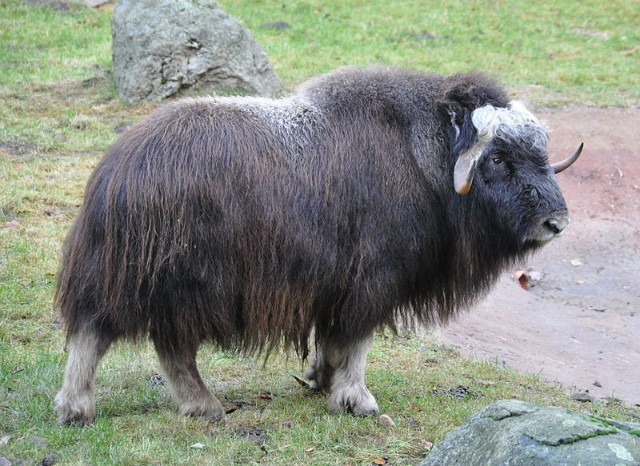
Fluffy majesty.
8.Cashmere. This luxurious wool comes from goats, and was developed in the Kashmir region of India (hence it’s name.) This wool is strong, light-weight, and quite a bit softer than regular wool.
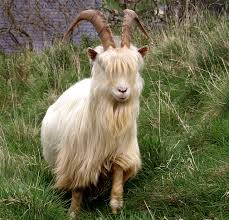
7.Mohair. This is made from Angora goat hair.It’s durable, shiny, and hardy against wear and tear. When treated properly, mohair can last a long time: these qualities have earned it the nickname “the diamond fibre.” It also takes on dye particularly well, making popular for textile design and clothing manufacture alike.
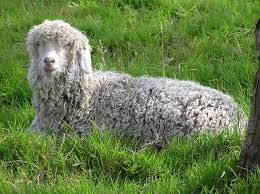
6. Angora. Not all wool comes from barnyard animals. Angora is made from rabbit fur! (Not from Angora goats. Confusing? Yes. Yes it is.) It is characterised by its softness and a kind of fluffiness known as a ‘halo’. It’s called that because the fibres sort of seem to ‘float’. Because of this fluffiness, Angora wool tends to felt very easily: felting can even occur on rabbits who are not properly groomed.
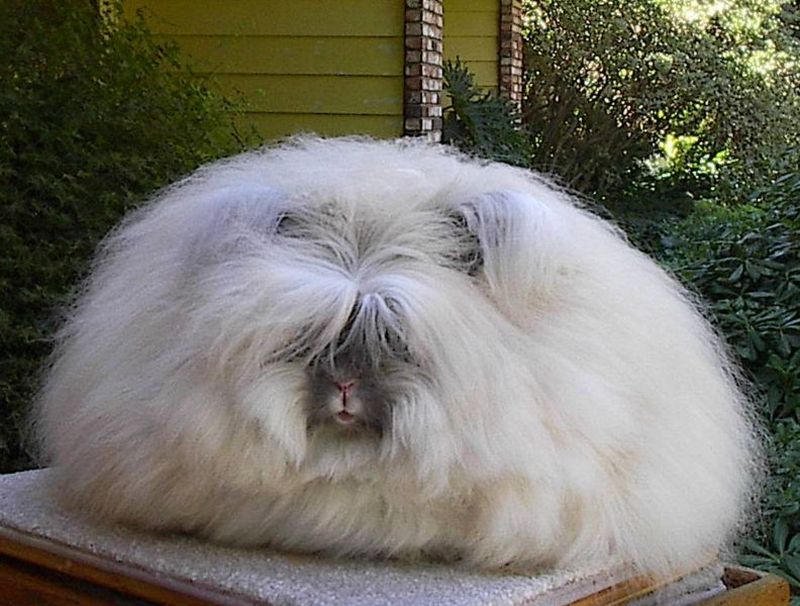
Frighteningly fluffy.
5. Sheep’s wool. This one is a pretty big category. There are so many breeds of sheep, and each one produces different kinds of wool. Sheep farmers have bred their flocks for distinct characteristics to achieve these differences, as well as shearing their sheep at different times throughout the year, and in the sheep’s life, to produce different effects in the wool. Some well-known types are Merino, Cotswold, Shetland, Hogget, and Karakul, to name a few.
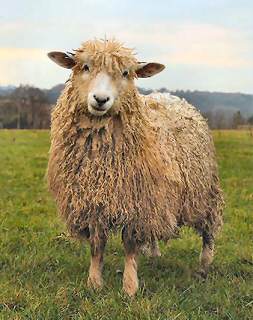
Hello, friend!
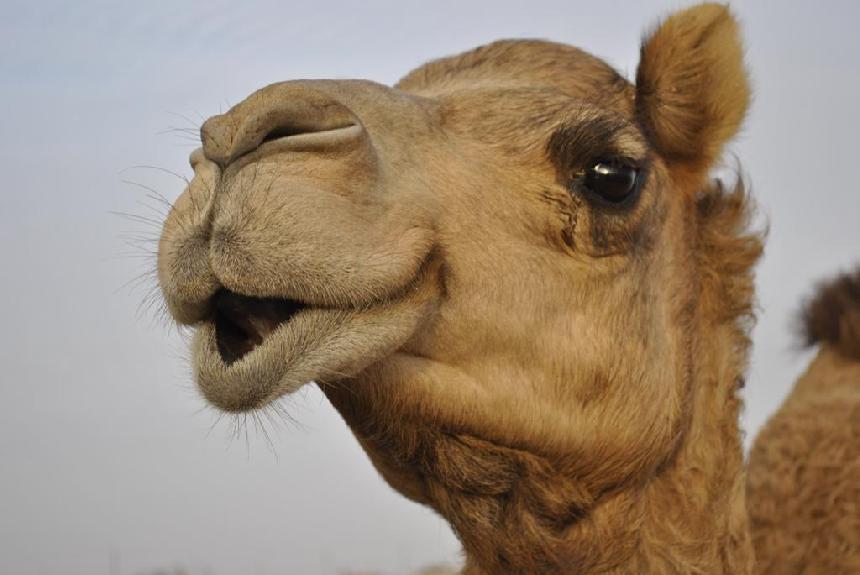
4. Camel Hair. Camels have two layers of hair making up their coats. One is the outer guard layer: it’s hard, coarse, and inflexible. It can be blended with other wools to soften these qualities. The undercoat of a camel is soft and fluffy, and is gathered when a camel molts, or sheds.
3. Alpaca fleece. The soft, dense fibre harvested from the alpaca (a camelid relative of the llama) is notable for its durability and silky texture. There are two main types of alpaca wool: huacaya has a natural crimp, making it ideal for knitting or crochet. Suri has no crimp, and is thus better suited to weaving. Both kinds are flame and water resistant, and have no lanolin, making this wool hypoallergenic.
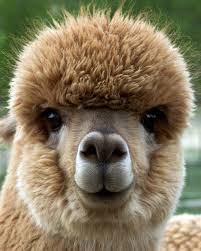
You want to go on a picnic? Alpaca some lunch.
2. Bison. Like the camel, American bison have two types of hair in their coat; a soft under-layer next to the skin is guarded by protective, coarse hairs which make up the outer layer. Both fibres can be used to make wool. The bison sheds its fluffly under-coat once a year, just like the camel does.
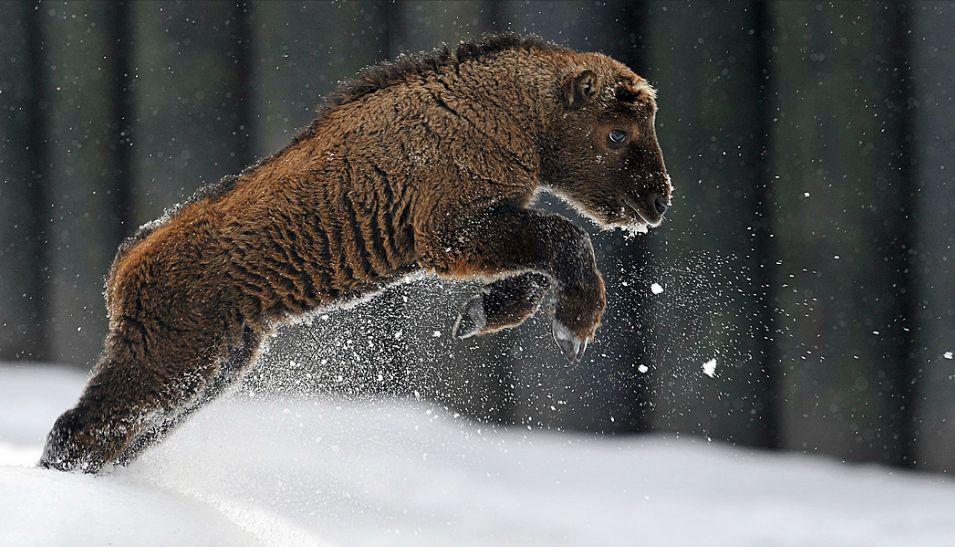
He’s almost as excited about wool as I am.
1. Domestic pet wool. Yes, this is a real thing. This type of wool is unique and unusual, and often considered a particular or niche product. (This is me trying to avoid out-and-out saying that it’s weird.) Nevertheless, dog and cat hair can be used as yarn. Obviously, the longer the hair, the better, so fluffy breeds like the collie or the Persian make ideal candidates.
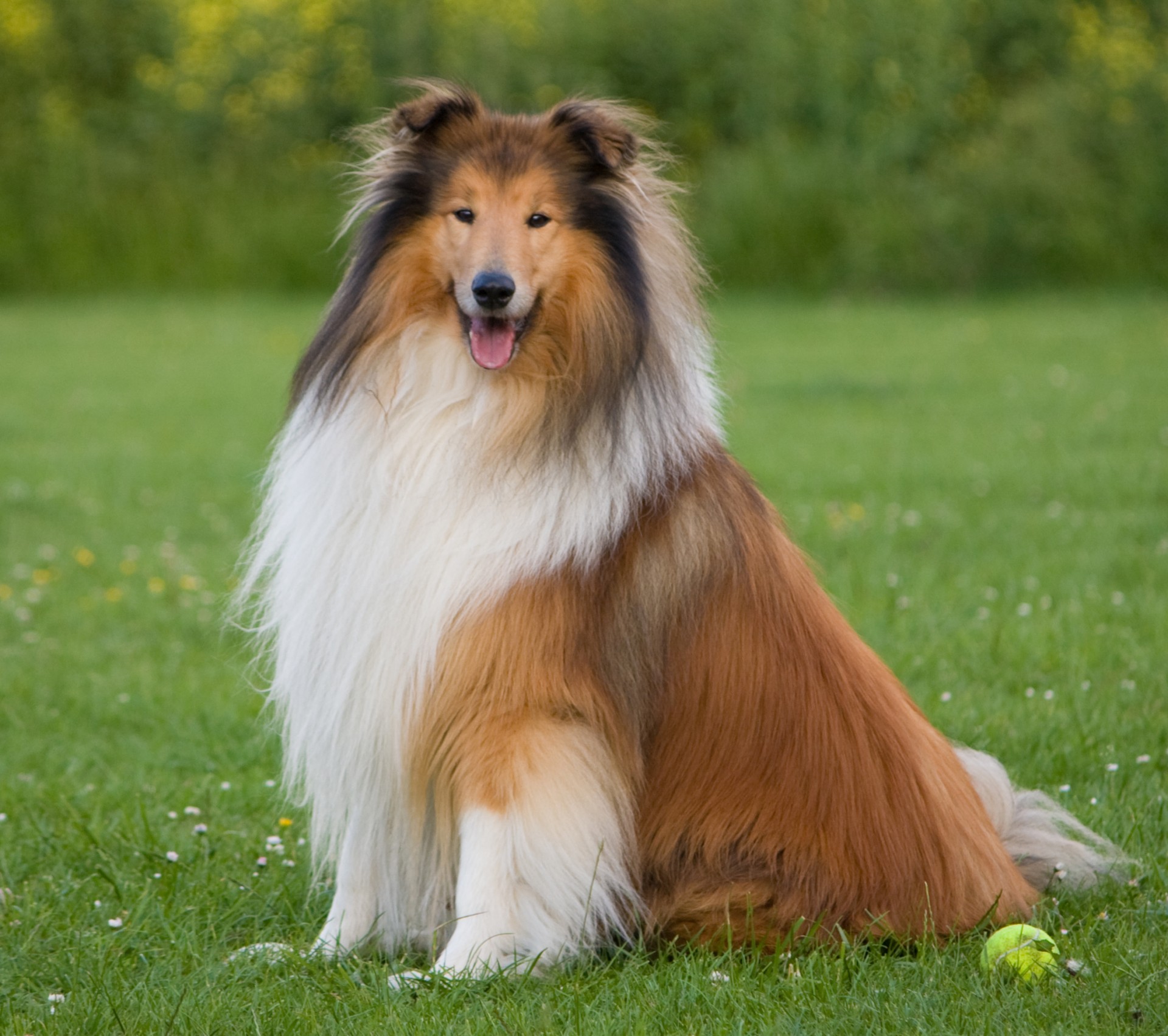
Care for a little woof in your wool?
An important note: harvesting wool from an animal is NOT meant to harm it. Shearing, or the process of removing hair or wool from an animal, is not only supposed to be a painless experience for the little critter involved; in many cases, shearing actually helps the animal. Many breeds of sheep are sheared during the hottest part of the year, so that they can chill out and stay cool in the heat. Some animals, like bison and camels, naturally shed their undercoat, so shearing them is just speeding up a natural process. Farmers take this stuff pretty seriously: there are sheep shearing competitions worldwide, and a big part of being an expert sheep shearer is doing the job as quickly and safely for the animal as possible, to reduce stress and prevent injury.
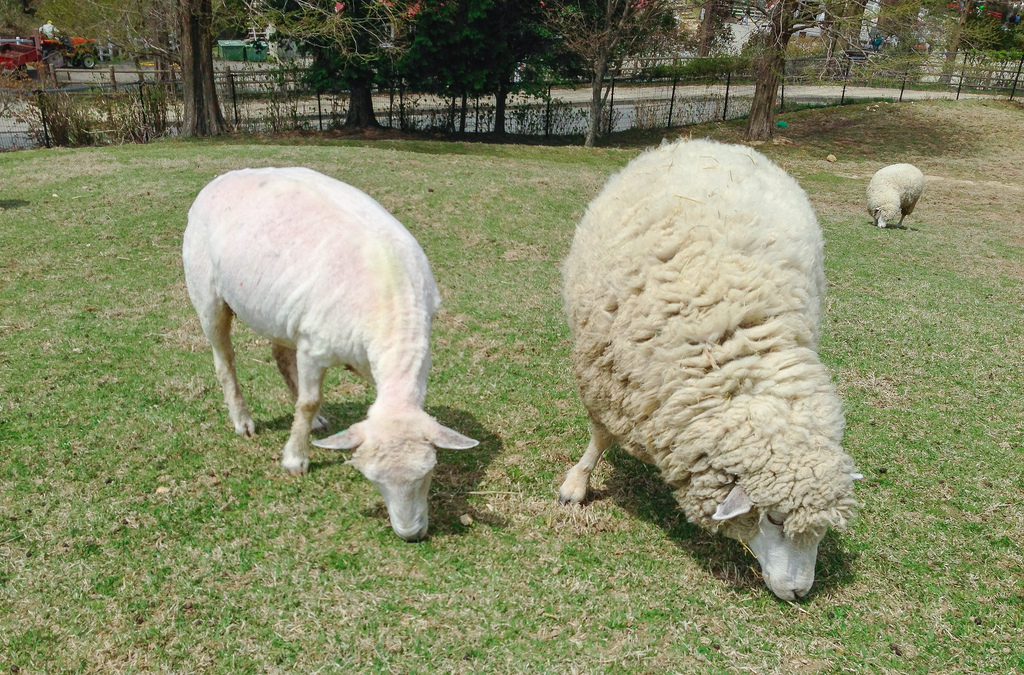
The before and after photo.
So we can feel good in our woolies, whether they come from camel or cat. If you’ve never tried working with some of these different wools, I say, give it a go! You never know what exciting results might await you. If you are familiar with these different fibres, I’d love to hear from you. What are your favourites, and why? Leave me a comment below!
Until next time, Reader.
Yours,
Cotton Jenny
 cottonjennyfabrics
But what are you knitting? Details required. Also, pictures.
LikeLike
Thanks for your reply! These days, I’m not actually knitting a thing in particular. Just knitting to knit. I find it really relaxing. What about you? Any on-going projects?
LikeLike