The Dress Code

Hello again, Reader.

I was planning a lovely post about embroidery stitches for today, but something has been weighing on my mind and gnawing at me, so the stitches are going to have to wait. Here’s the deal.

I was out for a walk yesterday with my boyfriend, on our way to dinner. We happened to walk past a group of four men, who seemed to be in their early twenties to me, but I didn’t stop to fact-check, so I’m not certain. As we overtook them, they hurled insults and slurs my way. I was startled and shaken. I have come to expect behaviour like that when I am alone or with other women, but never when I am with a man. That alone is a sad, and frankly abominable, state of affairs.

Even worse, Reader, was my reaction to this street harassment. I immediately glanced down to check what I was wearing.

I’m still deeply ashamed about this. No matter how much I decry it, I have bought into the idea that the clothes I put on my body invite particular responses from men, who are apparently unable to control themselves or their actions. According to this notion, the wretched behaviour I experienced is not men’s fault: it is my fault for wearing clothes that would entice or excite their brutish, animalistic natures.

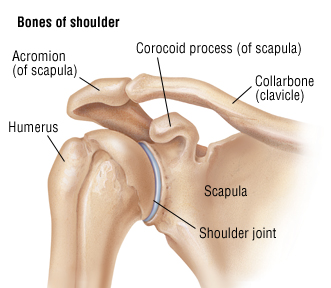
This is called victim-blaming, and I’ve been seeing it discussed a lot recently. One article that caught my attention recently recounted the details of a case in which a young woman was ejected from her high school classroom, sent to the principal’s office, and then sent home, missing a day’s worth of education, because (wait for it)… her collarbones were showing. I’ll repeat that. Collar. Bones.
So shocking!

So shocking!

What’s worse is that the reason given in her school’s handbook for why collarbones are so inappropriate for the classroom is that they would be a distraction for male students.

There are several problems with this line of thinking. First of all, it puts the responsibility for any kind of aggression or violence towards women, big or small, on women. That logic doesn’t work in other situations: if you get mugged, it’s your fault, because you were carrying something. If your home is broken into, it’s your fault, because you have a house. If someone keys your car, it’s your fault, because you had a car to key in the first place. We don’t say these things to victims of theft or vandalism. We do say these things to women who get harassed, verbally or otherwise.

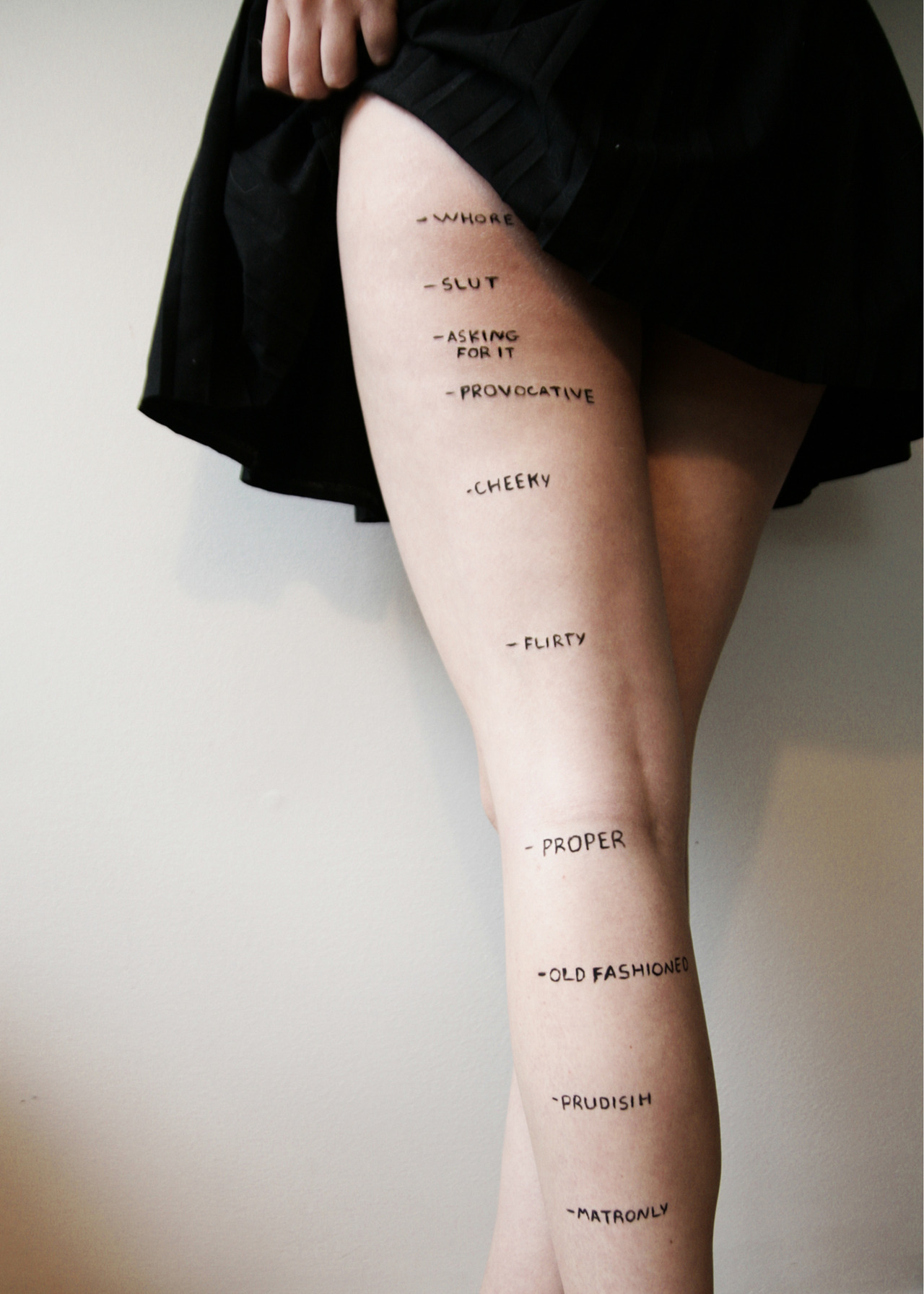
Secondly, it’s a fallacy that women who dress is an ‘appropriate’ way don’t receive aggression. Women in areas where dress is state-mandated and covers either all or most of their bodies still experience harassment from men.(Read more about it here.) Besides, what is ‘appropriate’, anyway? Some people would define what I was wearing last night as down-right prudish, while others would insist that because my wrists, ankles, hair, and face were exposed, that I was nigh-on inviting obscenities from these men. There is no set definition of ‘appropriate dress’, which is why schools have to make up guidelines. Doesn’t it seem odd that they have to invent rules to support the ‘rules’ they want their students to adhere to? If these rules are real, and should be followed, why don’t they already exist?
skirt-length

Now, some of you might be saying, “We agree that the collar-bone thing is a step too far, and we’re sorry that a bad thing happened to you, because we know you, but what about all those other women, who go around with their low-cut tops and short skirts and see-through fabrics and high heels? Surely those women are asking for whatever they get?”

Well, Reader, that’s a big old NOPE. Let me tell you why. For starters, this kind of dialogue between women is actually a tool to distance ourselves from those women whom society deems deserving of aggression, so that we don’t get mixed up with them and suffer their same fate. We shame and bad-mouth each other as a means of distinguishing ourselves as morally-upright, superior women who are beyond reproach, and to delude ourselves into thinking that we are safe from aggression from men. What we are really doing is throwing each other under the proverbial bus, and perpetuating the myth upon which victim-blaming is based: namely, that victims of harassment crimes are in any way responsible for their suffering.

Furthermore, dressing in a way that is deemed ‘sexy’ seems to have very little effect on whether or not a woman is harassed. All kinds of women get harassed, of all ages. I was harassed for the first time as a child of twelve. Harassment in any form isn’t about sex. It’s about power. The young men I passed on the sidewalk weren’t aiming to get to know me better, or even make a pass in the hopes that they’d get lucky. (We can be certain of this by asking ourselves one simple question: of all the couples you have ever known, how many of them met via street harassment?) They were showing off in front of each other, bigging up their own egos by making someone else (namely me) feel small. Similarly, men who cat-call by themselves aren’t trying to meet women. They are doing it for entertainment, for sport, to pass the time, and to make themselves feel good by asserting dominance over others.

All of this nonsense doesn’t put men in a very good light, does it? It makes them seem beastly, boorish, crass, insecure, immature, vulgar, and just plain rude. HIgh school boys, according to many dress-codes, are half-witted, animalistic brutes, unable to control their hormonal urges, and utterly enslaved by their bodies. There’s a name for this: it’s called toxic masculinity. Patriarchy doesn’t just have an impact on women. It also affects the way in which men experience life, and a lot of the time, not in a good way. From a young age, men are told that they have to be powerful, strong, aggressive, sexually virile, tough, insensitive, and unemotional to ‘count’ as a real man. Their positions as the dominant gender in our society balances on whether or not they can perform this role, and keep up the masquerade of toxic masculinity. We see examples of it all the time, but one of the most prevalent, and most dangerous, is in interactions with women. The young men who shouted at me were displaying dominance over me for the benefit of their friends, to show each other how masculine and powerful they are. This is the technique of the bully: to mask the feeling of insecurity, or to override it, they instill insecurity in others through aggression. But that’s just the problem. The aggression masks or overrides the feeling, but doesn’t deal with it, or make it go away. Toxic masculinity is bad for women and men.

Warning: may contain toxic masculinity.

Warning: may contain toxic masculinity.

So, long story short: my clothes, my shoes, my hair, my appearance, DO NOT invite aggression or harassment under any circumstance. As such, I will wear whatever I like, and enjoy wearing clothes that make me happy. I’m wearing them for me.

Also, a note to the distasteful ‘gentlemen’ who hollered unspeakable things at me:

The only kind of acceptable cat-calling is when you are actually calling a cat. Even then, the cat will be unlikely to listen to you, because it is a cat. I am not a cat, but, you will be amazed to learn, I am also not listening to you.

So stop it.

Until next time, Reader.

Yours,

Cotton Jenny

Summer Reading List

Hello again, Reader.

It’s been a while since I last posted. A major project of mine has just come to a close, and as usual, the last stretch is often the toughest. Suffice to say that I am grateful that it’s finished, and excited for what’s next, but also happy to call my time my own and dedicate a little more attention to the important things in life (like this blog, for instance).

It’s a sleepy Sunday, and in the interest of keeping it that way, and to ease back into the swing of things here at Cotton Jenny Fabrics, I’ve got a great little list coming your way, Reader.

I’ve been packing up for the big move that is coming at the end of this month, and in the process, came across some of my favourite books that deal with all things fabric, all of which I cannot recommend highly or often enough. Check them out!

8. Women in Clothes. Sheila Heti, Heidi Julavits, Leanne Shapton, et al. This is a fantastic collection of the results of an enormous, and yet remarkably intimate, survey carried out by the authors with over six hundred and thirty women of all ages, backgrounds, and experiences. The authors ask their subjects the same questions we often find ourselves mulling over in the morning as we stand, perplexed, before our own closets: how do these clothes make me feel? What is my favourite thing to wear? How have the opinions and feelings of others influenced how I feel about my wardrobe, and my body? These dialogues are interspersed with photographs and drawings, often of collections of garments (all the striped shirts owned by one woman; another’s collection of medical scrubs; a treasury of rings). It’s a sizable read, but due to the dippable nature of the surveys and interviews, it’s easy to get through, and begs to be re-read. The combination of these nutritious and delicious bite-sized morsels, and the surprising images alongside them, make this book reminiscent of the fascinating, funny, and frank conversations we have with our closest friends into the wee hours, teasing meaning from the tangled webs we weave.

Women in Clothes.

Women in Clothes.

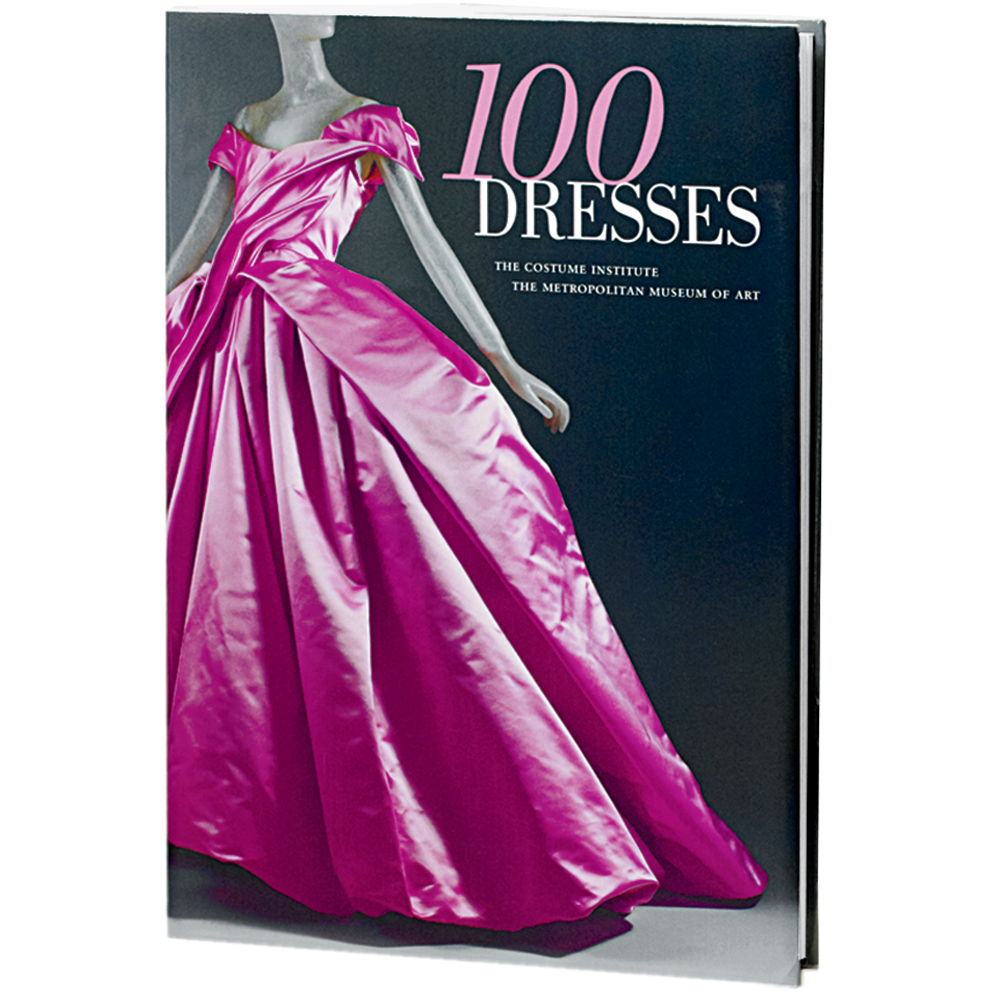
7. 100 Dresses. The Costume Institute at the Metropolitan Museum of Art. If you ever find yourself, as I often do, hungry for some substantial but stylish, sumptuous reading, then look no further than 100 Dresses. This book reads like a fashion magazine written by textile and fashion historians, which, come to think of it, is exactly what it is. One hundred full-colour photographs of the Met’s most famous and significant pieces from their costume collection are on display here, with delightful amuse-bouche write-ups, giving you just enough information about the dress and its salient points to whet your appetite, but not to overwhelm. They offer up examples dating back as far as the late seventeenth century, and continue into the present-day with contemporary examples. My personal favourites include Jean Patou’s 1931 hand-painted silk satin cape and dress, as well as stunning evening gown by Madame Grès in ivory pleated jersey from 1954-55. Incidentally, Reader, I spent several minutes poring over the pictures, trying to pick out a few examples to offer you, but it was difficult not to just tell you about each dress: in fact, I defy anyone interested in fashion history not to drool over every single garment equally. That’s the lovely thing about this book: you can lust after the delicious dresses while still feeling mentally nourished, because, after all, it’s historical, and that counts for something, doesn’t it?

100 Dresses

100 Dresses

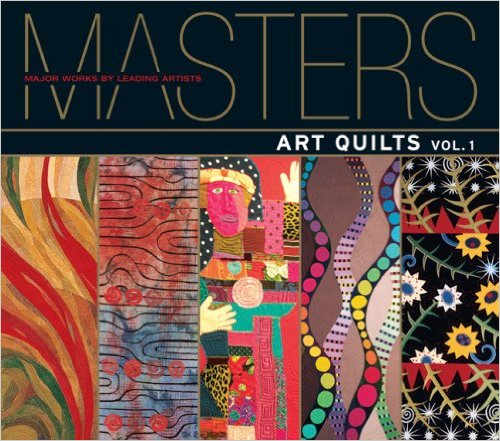
6. Masters: Art Quilts Volume 1 and 2. Edited and curated by Martha Sielman. I am certain, Reader, that you, like me, find yourself nearly daily in defense of quilting as an art form, and wondering to yourself, “wherever will I find documentation of great quilting artists to show people how great quilts are and what a great medium it can be?” Well, I am here for you, Reader, and so is this two-volume series. These books give an extensive list of works by artists from all over the world who work in quilting. Some of my favourite artists on offer here are Elizabeth Brimelow, Caryl Bryer Fallert, and Noriko Endo, Karin Franzen, and Dirkje van der Horst-Beetsma, among others. Each artist has a biography dedicated to them, as well as lots of examples from their oeuvre. It’s lots of fun to flip through, whether for inspiration, or simply to enjoy and admire the wonderful work of some of the quilting world’s best and brightest.

Masters: Art Quilts

Masters: Art Quilts

5. Heritage Quilt Collection. Agnes Etherington Art Centre.  Is there anything better than an exhibition catalogue? No, I thought not. They are like grown-up picture books, and ones that you can feel smugly proud of what you are reading, and be perfectly happy parading it before your friends and family. “Oh yes”, you say to them archly, “this is an exhibition catalogue.” They are duly impressed and you get to secretly enjoy looking at pictures and doing next to no reading at all, while still appearing deeply intellectual. This is one such book. There is a brief, cheerful introduction at the beginning, and the rest of the book is pretty picture after pretty picture. It’s also very lovely to have lots of Canadian content, and a celebration of Canadian women’s quilts. Perusing this book makes me feel deeply virtuous, and really, we can’t ask much more than that from our books. Unfortunately, this is a difficult book to get your hands on, so if you come across, nab it.

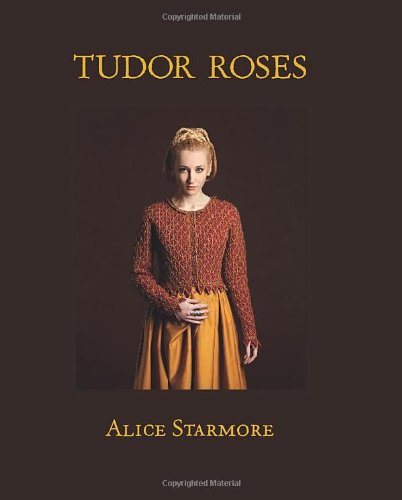
4. Tudor Roses. Alice Starmore. This is a fascinating book. Combining English history with knitting patterns might sound a little off-the-wall, but it’s a sumptuous, imaginative read, and an excellent well-spring of ideas for the avid knitter. The author has designed and executed gorgeous knitwear for the women of the Tudor court (thirteen in total), from Margaret Beauford to Anne Boleyn, and of course Elizabeth I and Mary, Queen of Scots are included. Jewellery was also designed specially for the publication. Each historical person is given a brief biography, which is followed by excellent knitting patterns and wonderful full-colour photographs showing the finished products to inspire the reader. This book makes a great work for avid historians and knitters alike. It’s artistic, intellectually stimulating, and quite simple, a very beautifully-executed book.

Tudor Roses

Tudor Roses

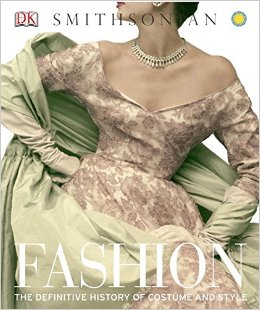
3. Fashion: The Definitive History of Costume and Style. Smithsonian Museum. This book weighs a tonne, so not only do you get a lovely read, but your biceps get a great work out as well. It’s one of those wonderful books that is substantial enough to lay open on its own, without you having to hold it open, which is delightful. But physical qualities aside, this is a wonderful book, and about as comprehensive as you could possibly want. It starts with ancient history and travels through to the present day, with oodles of drawings, photographs, and tasty little tidbits of information, but almost no long stretches of writing to slog through. Instead, there’s a kind of pastiche of wonderful bits of pieces, but it all ends up flowing together so that you see the changes and developments in fashion and dress as time goes on. One of the best things about this book is how chock-full it is of definitions. Don’t know what a peter-pan collar is? Here’s a definition, picture, and historical background for you. Want to know an accordion pleat from your a box pleat? Look no further. I go back to this book again and again to look up definitions and check my facts. So really, it’s not only a fun romp through fashion, it’s a factually accurate and deeply useful reference book.

Fashion: The Definitive History of Costume and Style

Fashion: The Definitive History of Costume and Style

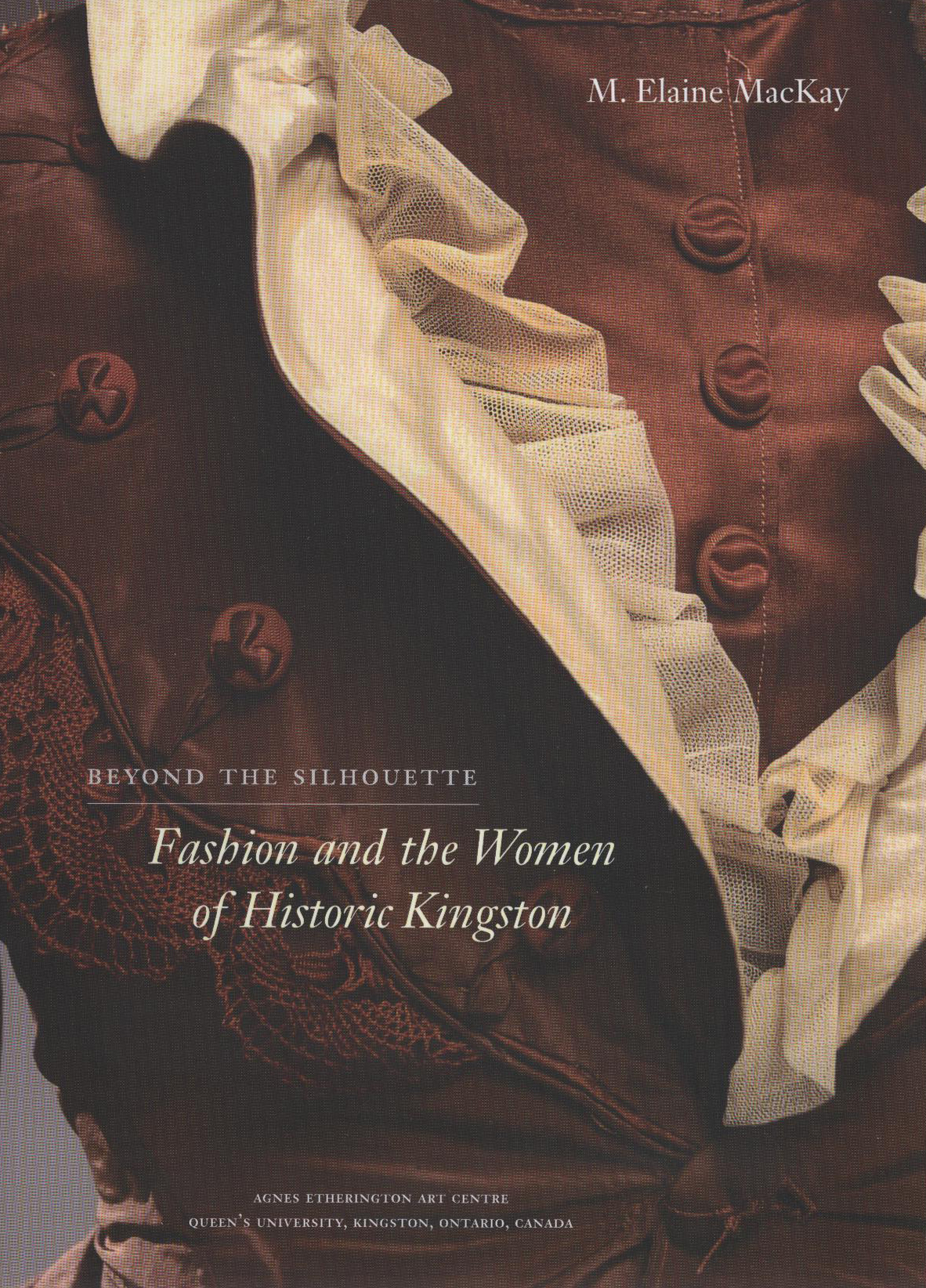
2. Beyond the Silhouette: Fashion and the Women of Historic Kingston. M. Elaine MacKay. This is a short but delightful morsel of women’s fashion in Kingston, Ontario. There’s a nice balance here of text and image, but one of the things I love most about this book is that the images provided are two-fold. Each garment is shown in full, but also in detail, so you can see the detail of the surface treatment, say, or the cunning buttons on a blouse, close-up and personal. The writing is cheerful and rollicking, and the garments and gowns are so pretty, you can’t help but go away from reading this book with an improved mood, and a strange desire to wear hoop shirts and ruffled blouses.

Beyond the Silhouette

Beyond the Silhouette

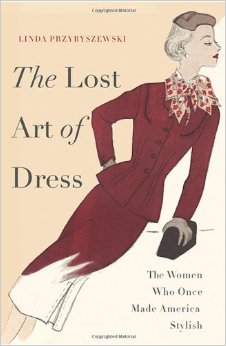
1. The Lost Art of Dress. Linda Przybyszewski. I think this may be one of my favourite books. Not just favourite textile/fashion books: just one the best ones, period. The author is fierce, fiery, and funny, and deeply knowledgeable about her topic. This is a call to arms/ obituary/ historical narrative detailing the rise and fall of home economics in the United States, and the “Dress Doctors” who led the charge. Here you can find at once cheerful fan-girling, imperious and shrewd advice, and mournful recollections of days past, as well as great, helpful dress and dressing tips, some of which you can find here. This is a great book for travel, and excellent inspiration for those of us frustrated with buying, keeping, and wearing clothes, and certainly would make excellent fodder for righteously angry seamtresses’ flames. Strangely, I found it extremely useful to read this book immediately before clearing out my closet, Przybyszewski’s cheerful but clear-headed voice ringing in my ears. I cannot recommend this book highly enough. Read it. Please.

The Lost Art of Dress

The Lost Art of Dress

I hope something here has tempted your appetite, Reader. I know it has mine: I’ve purposefully kept these books out of the packing boxes, so I can go through them again a few times before moving day arrives. It cheers me to think that you might be reading them alongside me one of these days.

Until next time, Reader.

Yours,

Cotton Jenny