Glossary A-H

Hello again, Reader.

I’ve been going over older posts, and thought that now would be as good a time as any to start building a glossary. It never hurts to be as clear as possible about what we mean when we use particular terms. The world of fabrics is full of them: the sheer number can overwhelm even the expert among us.

But not matter what your level of experience is, having a handy guide at your disposal to recall spellings, definitions, and examples can only help. Most of the definitions come from the Merriam-Webster or the trusty OED, although I’ve cut out some of the more superfluous bits, and focused on the really important, juicy stuff, so that you can find the information you want at a quick glance.

So here’s the beginning of an on-going glossary of terms that crop up frequently in this exciting, varied world. Let’s get stuck in!

A

Angora:  downy coat produced by the Angora rabbit.
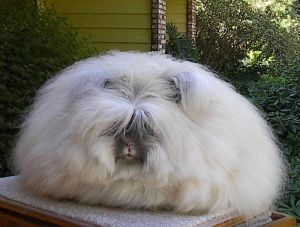
EnglishAngoraRabbit

Angora

 B

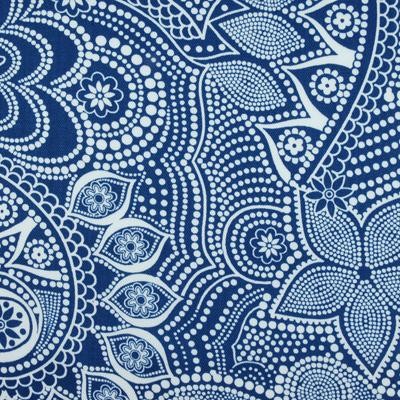
Batik: (n) a fabric printed by an Indonesian method of hand-printing textiles by coating with wax the parts not to be dyed; the method itself.
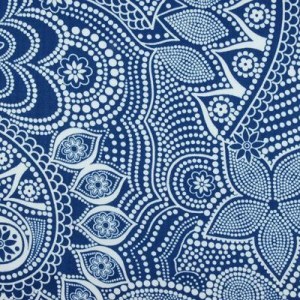
 

modern-outdoor-fabric

Batik


Bobbin: (n) a round object with flat ends and a tube in its center around which thread or yarn is wound.

Bobbinet: (n)  a machine-made net of cotton, silk, or nylon usually with hexagonal mesh.

Boiled wool: (n) created by a mechanical process using water and agitation, shrinking knitted or woven wool or wool-blend fabrics, compressing and interlocking the fibers into a tighter felt-like mass.

Bouclé:(n)  an uneven yarn of three plies one of which forms loops at intervals.

Brocade:(n) a cloth with a raised design in gold or silver thread.
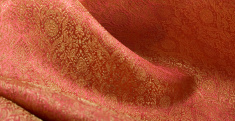
stock-photo-1969339-brocade.jpg

Brocade

Bunting:(n) a lightweight loosely woven fabric used chiefly for flags and festive decorations.

Burlap:(n) a strong, rough fabric that is used mostly for making bags.

C

Calico:(n) a light, printed cotton cloth :a heavy, plain white cotton cloth
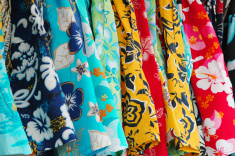
stock-photo-3532465-colourful-handkerchiefs.jpg

Calico

Cambric:(n) a light, thin, white linen or cotton cloth

Cashmere:(n) a fine wool from a kind of goat from India :a soft fabric made from cashmere wool.


Chambray:(n) a lightweight clothing fabric with colored warp and white filling yarns.

Charmeuse:(n) a fine semi-lustrous crepe in satin weave.

Chenille:(n) a wool, cotton, silk, or rayon yarn with protruding pile;also:a pile-face fabric with a filling of this yarn.

Chiffon:(n) a sheer fabric especially of silk.
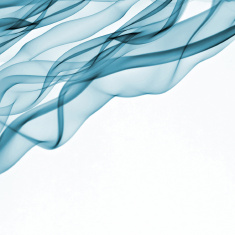
stock-photo-3486596-veil.jpg

Chiffon

Chintz:(n) a shiny cotton fabric with a flowery pattern printed on it.

Cloth: a flexible material consisting of a network of natural or artificial fibres.

Corduroy:(n) a durable usually cotton pile fabric with vertical ribs or wales.

Cotton:(n) a soft, white material that grows on the seeds of a tall plant and that is used to make cloth;also: the plants on which this material grows.
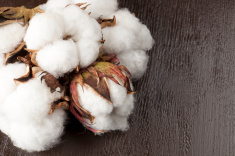
stock-photo-47863284-wood-on-the-cotton.jpg

Cotton

Cotton gin:(n) a machine that separates the seeds, hulls, and foreign material from cotton.


Crêpe:(n) a thin often silk or cotton cloth that has many very small wrinkles all over its surface.

Crinoline:(n) an open-weave fabric of horsehair or cotton that is usually stiffened and used especially for interlinings and millinery.

Crochet:(v) a method of making cloth or clothing by using a needle with a hook at the end to form and weave loops in a thread.

D


Damask:(n) a thick usually shiny cloth that has patterns woven into it.

Denim:(n) a firm durable twilled usually cotton fabric woven with colored warp and white filling threads.
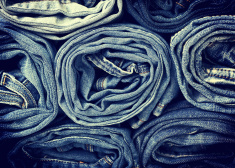
stock-photo-55897492-jeans.jpg

Denim

Double knit:(n) a knitted fabric (as wool) made with a double set of needles to produce a double thickness of fabric with each thickness joined by interlocking stitches: an article of clothing made of such fabric

Double weave: (n) a kind of woven textile in which two or more sets of warps and one or more sets of weft or filling yarns are interconnected to form a two-layered cloth, allowing complex patterns and surface textures to be created.

Duck:(n) (Dutch) also simply duck, sometimes duck cloth or duck canvas, a heavy, plain woven cotton fabric.

E

Embroidery:(n) the art or process of forming decorative designs with hand or machine needlework:a design or decoration formed by or as if by embroidery: an object decorated with embroidery.
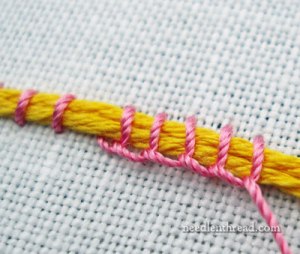
couching-02

Embroidery

Embroidery floss:(n) a loosely twisted, slightly glossy 6-strand thread, usually of cotton but also manufactured in silk, linen, and rayon, and  the standard thread for cross-stitch.

F

Fabric: (n) any textile or cloth that is considered to be man-made.

Faille:(n) a somewhat shiny closely woven silk, rayon, or cotton fabric characterized by slight ribs in the weft.

Felt: (n) a soft, heavy cloth made by pressing together fibers of wool, cotton, or other materials.
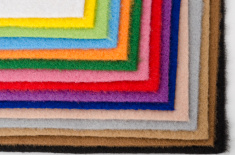
stock-photo-22113272-colorful-felt-plates

Felt


Fibre: (n) (Latin) a natural or synthetic substance that is significantly longer than it is wide.

Fishnet:(n) a coarse, open-mesh fabric.

Flannel:(n) a soft twilled wool or worsted fabric with a loose texture and a slightly napped surface: a napped cotton fabric of soft yarns simulating the texture of wool flannel: a cotton fabric usually napped on one side.

Fleece:(n) the coat of wool covering a wool-bearing animal (as a sheep): the wool obtained from a sheep at one shearing: any of various soft or woolly coverings: a soft bulky deep-piled knitted or woven fabric used chiefly for clothing.

G


Gabardine:(n) a firm hard-finish durable fabric (as of wool or rayon) twilled with diagonal ribs on the right side.

Gauze: (n) a thin often transparent fabric used chiefly for clothing or draperies: a loosely woven cotton surgical dressing.

Georgette:(n) a sheer crepe woven from hard-twisted yarns to produce a dull pebbly surface.

Gingham:(n) a clothing fabric usually of yarn-dyed cotton in plain weave.
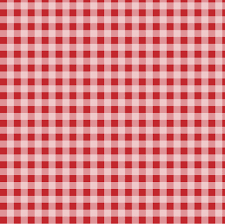
gingham.png

Gingham

Grosgrain: (n) a strong close-woven corded fabric usually of silk or rayon and often with cotton filler.

H

Haircloth: (n) any of various stiff wiry fabrics especially of horsehair or camel hair used for upholstery or for stiffening in garments.

Heather: (adj) refers to interwoven yarns of mixed colors producing flecks of an alternate color. It is typically used to mix multiple shades of grey or grey with another color to produce a muted shade (e.g., heather green), but any two colors can be mixed, including bright colors.

Hemp: (n) a tall widely cultivated Asian herb (Cannabis sativaof the family Cannabaceae, the hemp family) that has a tough bast fiber used especially for cordage and that is often separated into a tall loosely branched species (C. sativa) and a low-growing densely branched species (C. indica): the fiber of hemp.

Herringbone:(n) a pattern made up of rows of parallel lines which in any two adjacent rows slope in opposite directions: a twilled fabric with a herringbone pattern; also :a suit made of this fabric
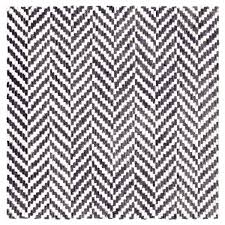
herringbone.jpg

Herringbone

Holland cloth: (n) a plain woven or dull-finish linen used as furniture covering or a cotton fabric made more or less opaque by a glazed or unglazed finish (the Holland finish).

Houndstooth:(adj) a usually small broken-check textile pattern; also: a fabric woven in this pattern —called also houndstooth check, hound’s-tooth check.


I will be continually up-dating these posts with new terms, and, as the title of this post suggests, there will be two more ‘Glossary’ posts, for I-P, and Q-Z, so keep an eye peeled for those! Looking for a particular definition, term, or information that you don’t see? Leave your comments, questions, and requests below! I’m looking forward to hearing from you!

Until next time, Reader.

Yours,

Cotton Jenny


Sheep Thrills

Hello again, Reader.

After my last post, which was all about knitting (read it here), I got the knitting bug and took up my needles again after what had been kind of a long break. I have a big bowl of wool in my living room, filled to overflowing with balls of yarn. Some of them are really, really lovely wool, and others…well, let’s just say they leave something to be desired.

Mostly, the yucky yarns are synthetic. They stretch too much or not enough. They unravel. Worst of all, they feel sort of scratchy and hard, like they are made of plastic. (Likely because they are plastic.)

The nicest skeins, though, are natural fibres. I think my current favourite is beautiful alpaca wool from a local farm in my area. Each skein from this farm comes with a picture of the alpaca from whom the wool was harvested. They are adorable, but they always look slightly grumpy. Maybe it’s because they know I have their wool.

Wool, by the way, despite the fact that we throw this term around to mean a lot of different things, has a very particular meaning. Wool is the soft, wavy or curly and usually thick undercoat of various hairy mammals made up of a matrix of keratin fibers and covered with minute scales. That’s a very fancy way of saying that wool is curly, made of keratin (the same stuff as your fingernails) and comes from fuzzy, fluffy, furry animals. But we use this term to apply to those animal fibres we use to produce a twisted strand ideal for knitting, crochet, or weaving.

Anyway, I was thinking about all of these different types of wool, and thought “Hey! I love a good list!” So for a little easy reading on a lazy Sunday, here is:

An Unordered List of Wool Types

10. Synthetic Wool. Scratchy and weirdly stretchy, or not stretchy at all, these yarns are cheap, but sometimes, you get what you pay for. These yarns may be comprised of a wide variety of different synthetic or natural fibres in different percentages. Some are better than others, but on the whole, my experience with this type of wool has been pretty hit and miss. (Mostly miss.)

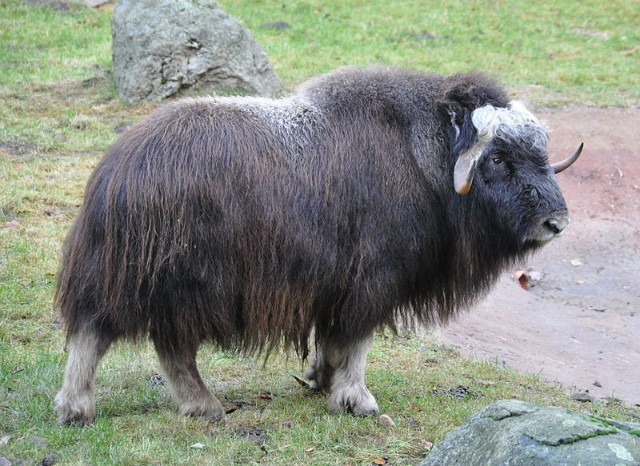
9. Quivit. This one may be harder to come by if you don’t happen to be neighbours with a muskox, because that’s where quivit wool comes from. It’s pretty nifty stuff: unlike other types of wool, it doesn’t shrink in water, no matter the temperature. While this means that it’s impossible to shrink down your favourite quivit sweater, it also renders quivit useless for felting.

Fluffy majesty.

Fluffy majesty.

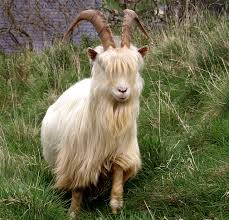
8.Cashmere. This luxurious wool comes from goats, and was developed in the Kashmir region of India (hence it’s name.) This wool is strong, light-weight, and quite a bit softer than regular wool.

kashmir

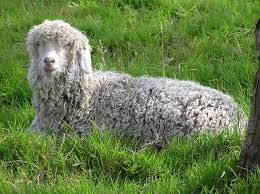
7.Mohair. This is made from Angora goat hair.It’s durable, shiny, and hardy against wear and tear. When treated properly, mohair can last a long time: these qualities have earned it the nickname “the diamond fibre.” It also takes on dye particularly well, making popular for textile design and clothing manufacture alike.

angora

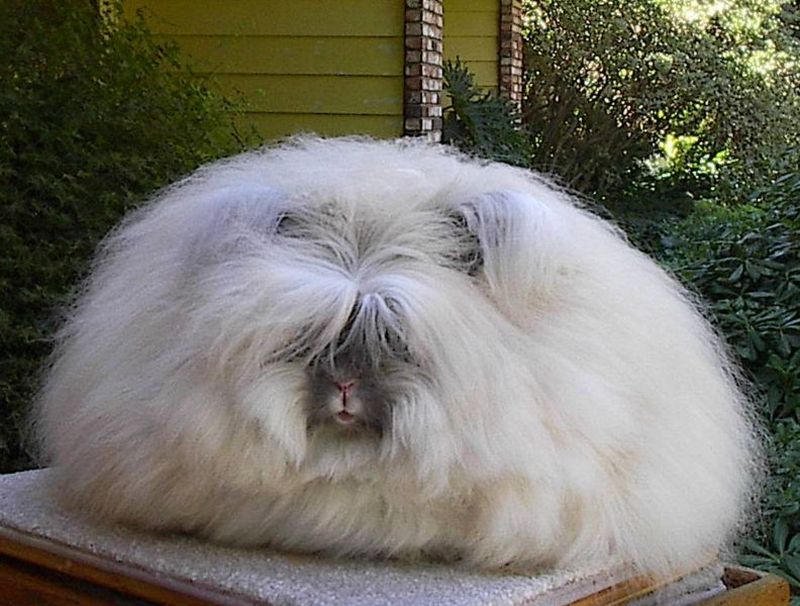
6. Angora. Not all wool comes from barnyard animals. Angora is made from rabbit fur! (Not from Angora goats. Confusing? Yes. Yes it is.)  It is characterised by its softness and a kind of fluffiness known as a ‘halo’. It’s called that because the fibres sort of seem to ‘float’. Because of this fluffiness, Angora wool tends to felt very easily: felting can even occur on rabbits who are not properly groomed.

Frighteningly fluffy.

Frighteningly fluffy.

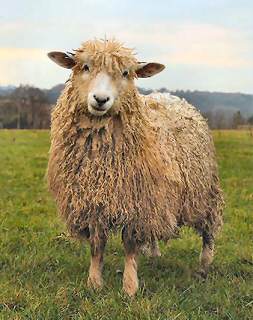
5. Sheep’s wool. This one is a pretty big category. There are so many breeds of sheep, and each one produces different kinds of wool. Sheep farmers have bred their flocks for distinct characteristics to achieve these differences, as well as shearing their sheep at different times throughout the year, and in the sheep’s life, to produce different effects in the wool. Some well-known types are Merino, Cotswold, Shetland, Hogget, and Karakul, to name a few.

Hello, friend!

Hello, friend!

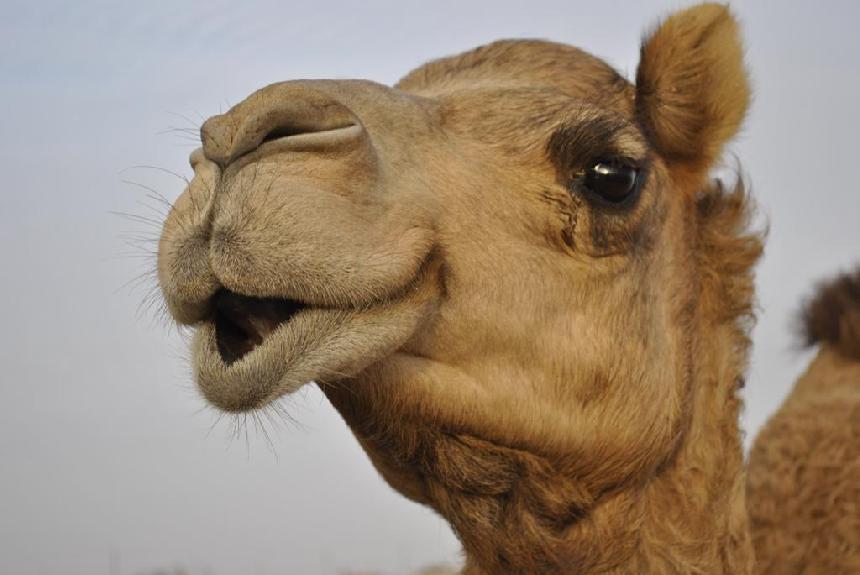
4. Camel Hair. Camels have two layers of hair making up their coats. One is the outer guard layer: it’s hard, coarse, and inflexible. It can be blended with other wools to soften these qualities. The undercoat of a camel is soft and fluffy, and is gathered when a camel molts, or sheds.

ATBCamel4

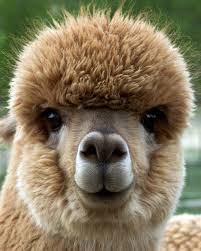
3. Alpaca fleece. The soft, dense fibre harvested from the alpaca (a camelid relative of the llama) is notable for its durability and silky texture. There are two main types of alpaca wool: huacaya has a natural crimp, making it ideal for knitting or crochet. Suri has no crimp, and is thus better suited to weaving. Both kinds are flame and water resistant, and have no lanolin, making this wool hypoallergenic.

You want to go on a picnic? Alpaca some lunch.

You want to go on a picnic? Alpaca some lunch.

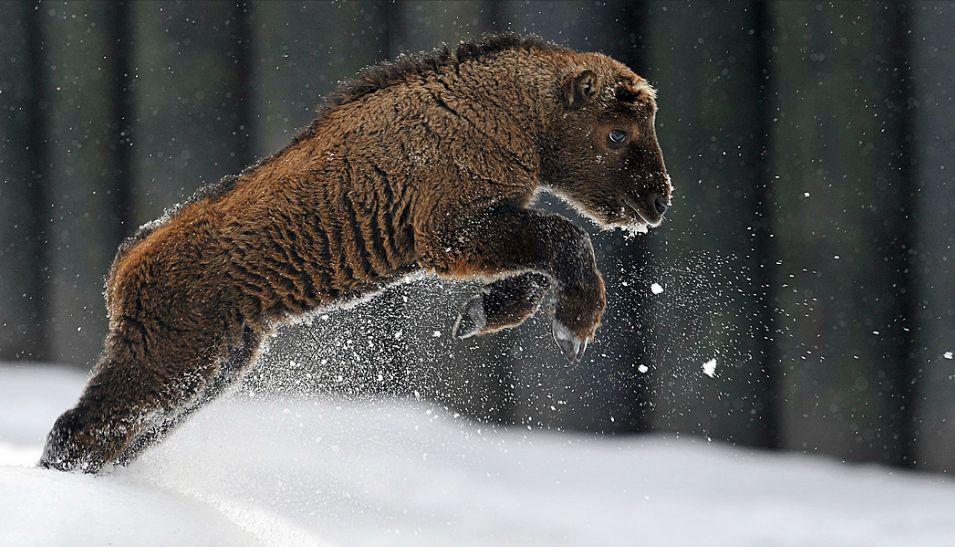
2. Bison. Like the camel, American bison have two types of hair in their coat; a soft under-layer next to the skin is guarded by protective, coarse hairs which make up the outer layer. Both fibres can be used to make wool. The bison sheds its fluffly under-coat once a year, just like the camel does.

He's almost as excited about wool as I am.

He’s almost as excited about wool as I am.

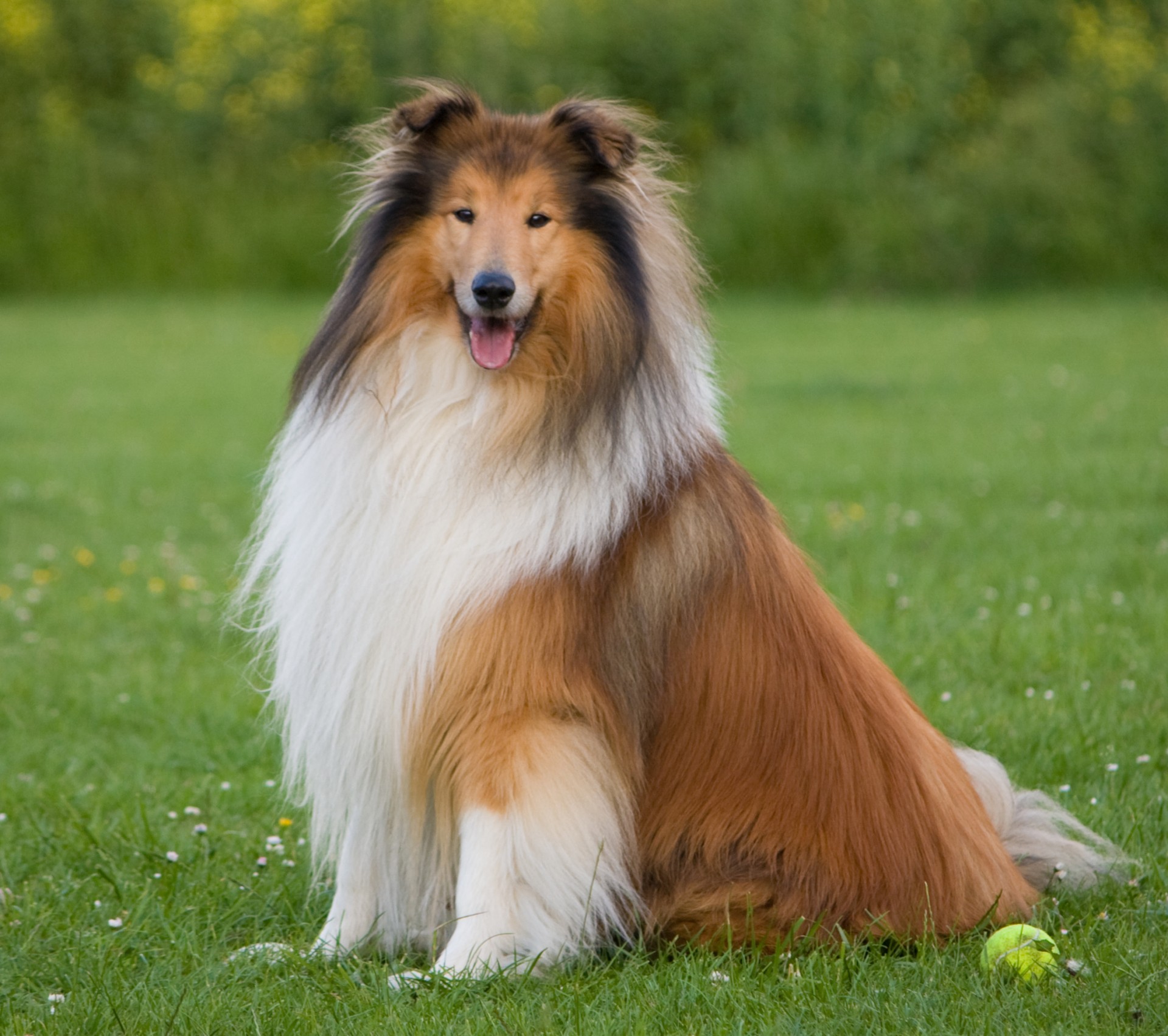
1. Domestic pet wool. Yes, this is a real thing. This type of wool is unique and unusual, and often considered a particular or niche product. (This is me trying to avoid out-and-out saying that it’s weird.) Nevertheless, dog and cat hair can be used as yarn. Obviously, the longer the hair, the better, so fluffy breeds like the collie or the Persian make ideal candidates.

Care for a little woof in your wool?

Care for a little woof in your wool?

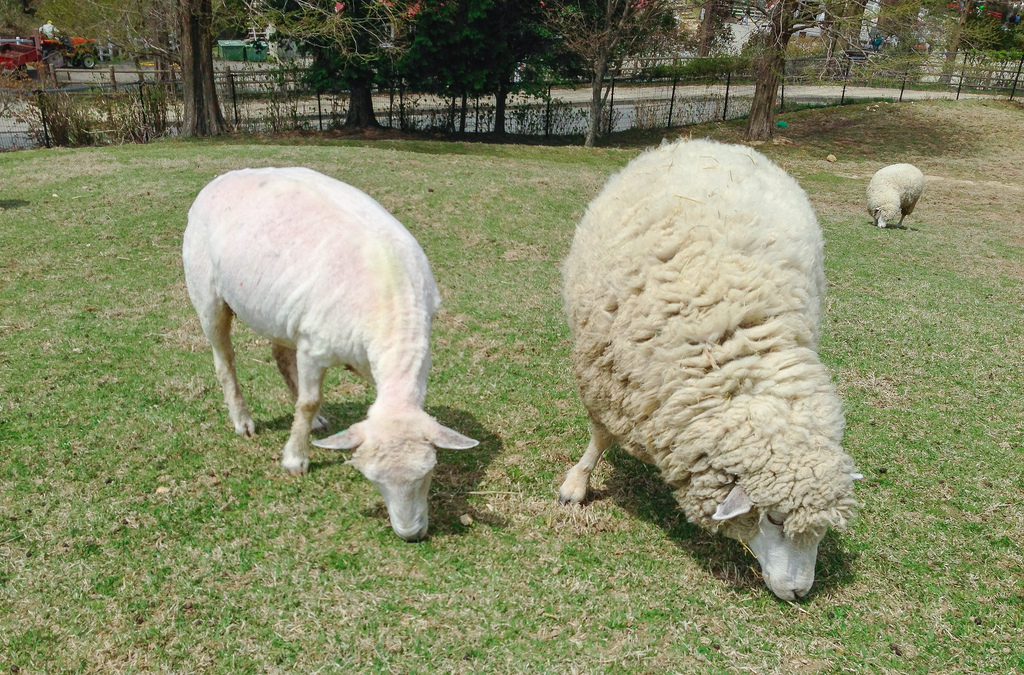
An important note: harvesting wool from an animal is NOT meant to harm it. Shearing, or the process of removing hair or wool from an animal, is not only supposed to be a painless experience for the little critter involved; in many cases, shearing actually helps the animal. Many breeds of sheep are sheared during the hottest part of the year, so that they can chill out and stay cool in the heat. Some animals, like bison and camels, naturally shed their undercoat, so shearing them is just speeding up a natural process. Farmers take this stuff pretty seriously: there are sheep shearing competitions worldwide, and a big part of being an expert sheep shearer is doing the job as quickly and safely for the animal as possible, to reduce stress and prevent injury.

The before and after photo.

The before and after photo.

So we can feel good in our woolies, whether they come from camel or cat. If you’ve never tried working with some of these different wools, I say, give it a go! You never know what exciting results might await you. If you are familiar with these different fibres, I’d love to hear from you. What are your favourites, and why? Leave me a comment below!

Until next time, Reader.

Yours,

Cotton Jenny
Let’s Get Technical…

Hello again, Reader. Hoping this post finds you in good spirits, and yearning for learning!

As always, we begin at the beginning. What is a textile? What is a fabric?

Our trusty friend the dictionary tells us that fabrics are anything man-made, which a pretty broad category. Generally we say fabric and mean man-made, pliable, fibre-based materials which display tensile strength: they can be pulled and stretched and won’t ‘break.’ Textiles are just woven fabrics. Simple, right?

Well, yes and no. We throw these words around a lot, and use them interchangeably. For example: that cotton sundress is made of a (pretty darn cute) textile. The knitted sweater you throw over it, however, is not a textile: its a fabric.

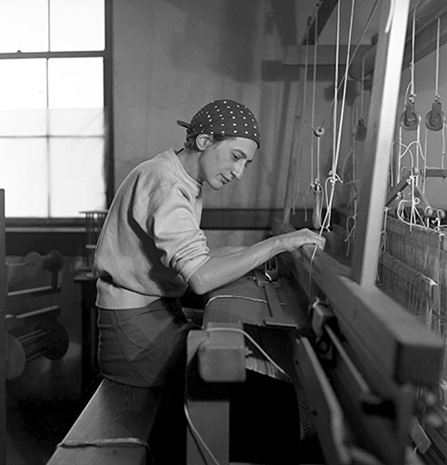
This may seem pedantic, and well, yes, it is. However, knowing about a fabric’s construction can help us make decisions about how to treat it. The startlingly wonderful Anni Albers reminds us that any fabric is mainly the result of two things: its fibres; and its construction. (As an aside, please, please, please check out her two big books On Weaving and On Design, or visit the Albers Foundation website to check out her work and her pretty photographs. Like this one.)

Albers in the weaving workshop at the Bauhaus school in Dessau. Image courtesy of Albers Foundation.

Albers in the weaving workshop at the Bauhaus school in Dessau. Image courtesy of Albers Foundation.

This means that we can have all kinds of variations on the types of fibres available to us. Natural fibres fall into two main categories: plant-based and animal-based. Man-made fibres get their own fancy categories. Ready for a list? I know I am!

Natural Man-Made
Plant Animal rayon
Flax/linen cashmere polyester
cotton angora nylon
Sisal alpaca spandex
Hemp silk acrylic
Jute mohair acetate
Bamboo wool saran

Now, this is obviously not an exhaustive list. (For more, check out Bernard P Corbman’s Textiles: Fiber to Fabric 1975) There’s all kinds of sub-categories and other variations on these fibres. And most of us can find fibre blends in the clothes we wear, which means there are even more potential combinations. That’s just one half of the equation. Our darling friend and mentor Anni tells us that the second part is a fabric’s construction. But what exactly does she mean by that?

Well, despite the fact that we don’t often think about fabrics as things that need building, that’s a pretty good metaphor for how fibres come together to make a fabric. All fabrics have a structure, which is developed by how the fibres interact with each other. Technical enough for you yet, Reader? Let’s look at some examples.

A single-weave textile will have stretch on a diagonal (called the bias), but be a bit more rigid if you stretch it top to bottom, or side to side, depending on how tightly it’s woven. That’s because the textile has one set of threads running top to bottom, and another set running side-to-side. These thread sets are interwoven with one another, and kind of ‘lock’ each other into place. This stiffness means we can usually cut a woven textile without ruining it. That fabric of cotton sundress we talked about earlier is probably made this way.

But now let’s consider that little cardigan. It’s knitted. Knitting is a process of linking a series of loops with one another to make a fabric. Because it is based on loops made from one long yarn, rather than straight linear threads, knitting produces fabric which tends to stretch in any direction. (Actually, the single looped yarn also make it possible to express hyperbolic geometry with knitting and crochet…but more on that later!) If you’ve ever ripped or snagged a wool sweater or scarf, you’ll know that cutting a straight-up knitted fabric is a good way to ruin it.

These are pretty obvious examples, but the principle applies to most fabrics. If you know of what the fabric is made, and how it was made, your chances of treating your fabrics properly, and keeping them in good condition, are much higher. And that can only be good news!

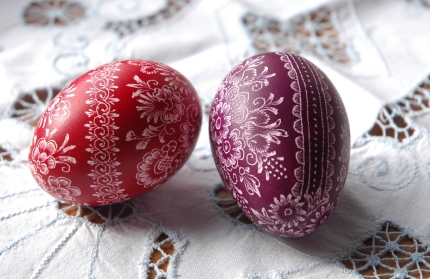
The other thing this information can tell us is what the best uses for our fabrics might be. We know that boiled wool is probably not the best for that sunny frock, but a cheerful and innocent-looking cotton batik (“bah-teek”) might also not be a good pick, despite its adorable pattern. That’s because batiks are dyed using a wax-negative process (sort of like Eastern-European Easter eggs), and the dye is applied to the surface of an already-woven cotton.iStock_000001376648XSmall

The threads are dyed in the fabric, not ‘in-the-wool.’ (Incidentally, that’s where that saying comes from.) A fabric whose dyes were added to the threads before the fabric was made is more likely to keep its colour and not fade, run, or bleed colour. A batik is dyed after the fabric has been woven, which means that the dye might be more likely to run or fade. This bad news for clothes, especially clothes for warm weather, unless you are keen on dyeing your skin with your pretty new dress. (No, me neither.)

modern-outdoor-fabric

Well, Reader, I’ll be darned if I’m not inspired to frolic through a fabric store, what with all this talk of batiks and cotton sundresses. Until next time, then!

Yours,

Cotton Jenny.