Bayeux Tapestry Troubles

Hello Reader.

Yesterday, someone called me Jessica. It’s happened to me before: actually, it happens all the time. It doesn’t bother me, but it does make me laugh, and confuses me a little. My name isn’t Jessica; it doesn’t sound like Jessica at all; and I don’t think I look remotely like a Jessica.

But it got me thinking about misnomers. And, in my world, one of the biggest victims of shoddy PR is the Bayeux Tapestry.
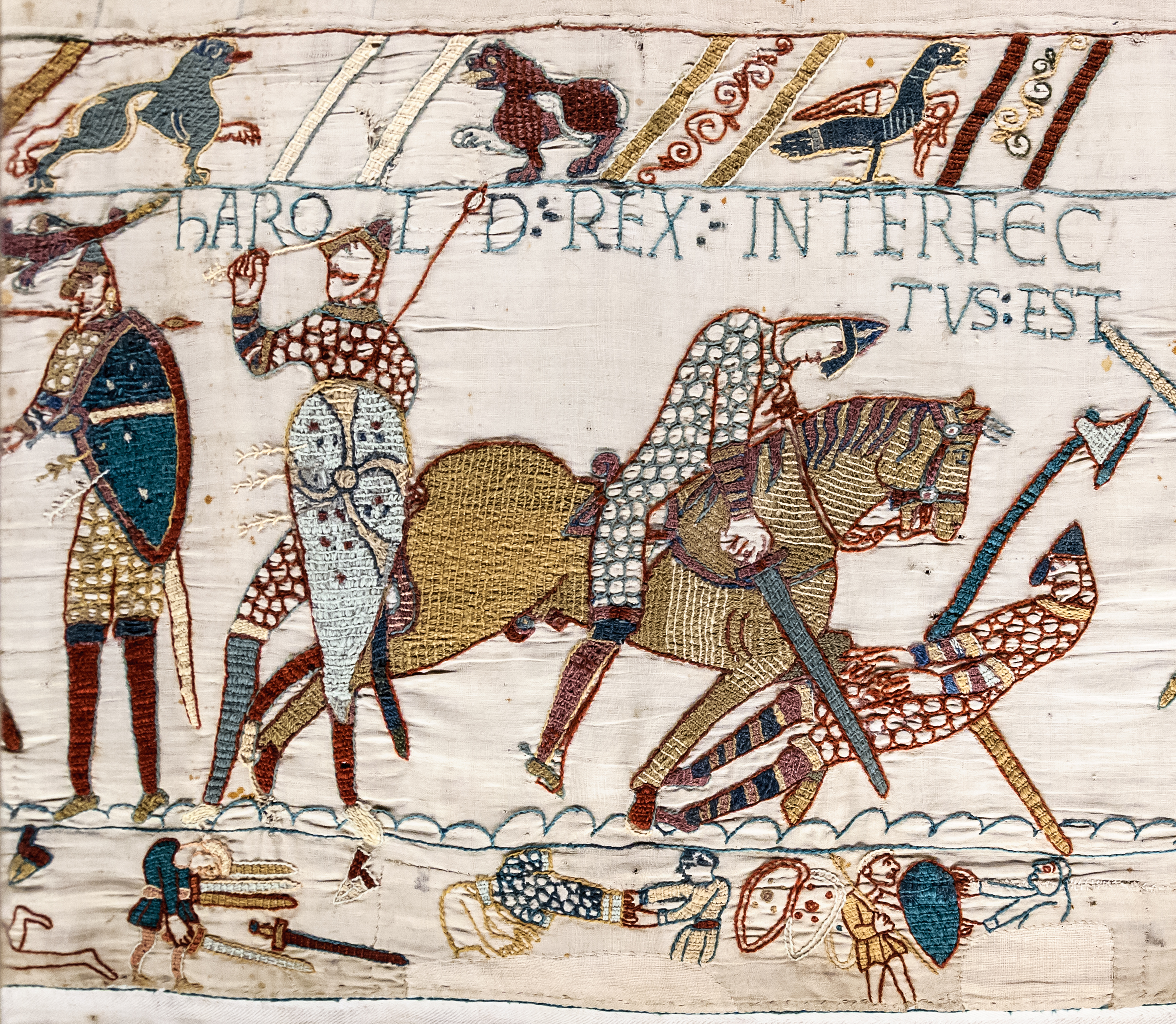
Bayeux Tapestry, Scene 57: Harold's Death, aka King Harold gets an arrow in the eye. No thank you.

Bayeux Tapestry, Scene 57: Harold’s Death, aka King Harold gets an arrow in the eye. No thank you.

The Bayeux Tapestry details the Norman invasion and conquest of England in 1066. William the Conquerer, the duke of Normandy in France, basically had a big old dust-up with King Harold of England, and, well, William won. Hence the moniker. The Bayeux Tapestry shows us important moments leading up to, and including, the battle.  It’s fifty centimetres high and nearly seventy metres long, but it used to be longer: a few sections no longer survive. It essentially works a bit like a comic book or a photograph in a newspaper. There are images of scenes from the battle, and other relevant illustrations, which are captioned with short descriptions in Latin, called tituli, above. It’s really old, has survived miraculously well, illustrates an important moment in European history, and is thus pretty well-known. And that’s the Bayeux Tapestry in a nutshell.

Except it’s not. Firstly, it’s not a tapestry. It’s embroidered woolen thread on tabby linen panels, which were stitched together. And while it resides in the French town of Bayeux now, it isn’t from Bayeux. Actually, scholars aren’t one hundred percent sure where it’s from. Some claim England; specifically the Kent region. Others argue for Burgundy in France.

(Also, I spent a lot of my life saying “Bay-oh”, but that’s not correct. It’s “Bay-yuh.” My mistake.)

The more digging you do, the more mysterious this embroidery becomes. No one’s really sure who commissioned it. Was it Bishop Odo, the newly crowned King William’s half-brother? Was it Queen Matilda, William’s wife? The arguments for Bishop Odo are the most compelling, but others champion Edith of Wessex. There is, essentially, an entire group of scholars who spend many of their waking hours thinking about, writing about, and arguing about, who made it and where it was made. And now, at least for the length of this post, I get to be one of them.

There are a couple of different key clues that give us information about the embroidery, and where it might come from, and who made it. Primarily, we can look at construction and materials. The plant-based dyes and wool thread, as well as the method of couch-stitching used to fill in the images indicate that it may have been made in England: the kinds of plants used to make the blue woad dye grow in the Kentish region of England.
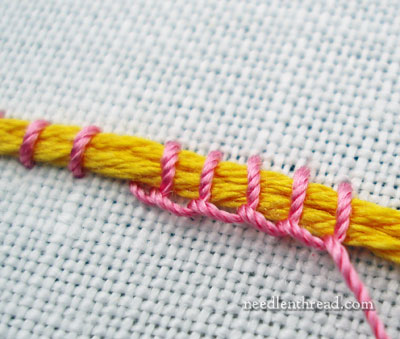
An example of couch stitching.

An example of couch stitching.

We can also check out the style of the images. While it is disputed by some, many scholars agree that the Bayeux Tapestry’s style falls within the category of Opus Angilicanum, or Anglo-Saxon needlework. That places us in England again. It might also explain why, despite the fact that this textile depicts a pretty significant Anglo-Saxon defeat, the Anglo-Saxon army and their king, Harold, are depicted in a pretty positive light. The tituli are predominantly in Latin, but there are fragments of Anglo-Saxon, again leading many researchers to believe that this was an Anglo-Saxon work.

This information can indicate who might be responsible for this work. Bishop Odo’s power-base in England was Kent. As a bishop, he also had access to an unpaid labour force: namely, cloistered nuns. Unfortunately, women working without recognition or remuneration is a recurring theme in textile history, and the Bayeux Tapestry may be just another example in a long, long, list. It is also important to note that Bishop Odo’s cathedral and bishopric in France was in… you guessed it… Bayeux. Actually, it was built and dedicated in the 1070’s, which is around the same time that the Bayeux Tapestry was likely finished. That might explain why it ended up there, but we have a huge gap between it’s production after 1066, and the first written record of the textile, which didn’t come until 1476 in an inventory of the cathedral. This gap makes it impossible to know for certain exactly what happened to it.

Exterior view Bayeux Cathedral in Bayeux France. Nice digs, Odo.

Exterior view Bayeux Cathedral in Bayeux France. Nice digs, Odo.

If the Bayeux Tapestry was commissioned by a Norman bishop, Odo, the half-brother of the conquering Norman king, but actually executed by Anglo-Saxon needle-workers, that might also explain the ‘tone’ of the piece. The Anglo-Saxons aren’t depicted as cowardly, nor as particularly bad people, but there is no doubt about who came out on top: the Normans won, big-time. This leads many scholars to consider the Bayeux Tapestry an example of an apologia. An apologia is a kind of defense of one’s opinions or actions. The Normans, and perhaps especially Bishop Odo, may have felt that they were meant to rule England. It’s possible that they felt they had God on their side. The Anglo-Saxons might have disagreed with them, but the victors usually get to write the history books, (or design the embroidery, as it were). Perhaps the Bayeux Tapestry is an example of recently conquered Anglo-Saxon nuns trying to get a word in edgewise about how their people weren’t so bad, after all.

One way or the other, this tapestry often leaves us with more questions than answers. And unless new information comes to light, which is always an exciting possibility, we’ll have to content ourselves with guessing. I have to say, as frustrating as all these uncertainties can be, there’s also something kind of fun and invigorating about not really knowing. There’s nothing like a good mystery to get your curiosity piqued.

61cLffOZONL._SY344_BO1,204,203,200_

Keen to learn more? Check out A Needle in the Right Hand of God: the Norman Conquest of 1066 and the Making and Meaning of the Bayeux Tapestry by Howard Bloch for more details, and lots of full-colour reproductions!

Until next time, Reader.

Yours,

Cotton Jenny
Space…the Fabric Frontier

Hello again, Reader.

I was chatting with friends yesterday about moving. Both buddies are in transit, we were talking about the trials and tribulations of moving. One of my friends was also trying to come up with ways to increase her access to privacy: she’s moving in with several other roommates, and as a dyed-in-the-wool introvert, she’s a little nervous about keeping things happy and happening in the house.

An introvert in her natural habitat.

An introvert in her natural habitat.

I totally understood where she was coming from. I live in an apartment, which, most days, is excellent. Every once in a while,though, I want more privacy than my 1970’s, open plan place will afford. And for people like her, and like me, putting in new walls or re-configuring the layout are simply not options. Even if we could afford it (a big old no), most landlords and superintendents don’t much care for their tenants going all DIY.

Besides, permanent walls are so, well, permanent. There has to be a better solution.

Well, Reader, I am here to tell you that there is, and that it comes to us from the wonderful world of modernist interior design. What’s the answer? Fabric!

Seriously though. People have been tackling this problem for a long time, but it’s almost as though we’ve forgotten about their genius solutions. People like Frank Lloyd Wright, Walter Gropius, and Adolf Loos, all of them famous architects, knew that a well-placed curtain worked wonders on a room.

The living and dining room from Walter Gropius' house in Lincoln, MA. Note the curtains which can be pulled close or open depending on which of the two spaces was in use.

The living and dining room from Walter Gropius’ house in Lincoln, MA. Note the curtains which can be pulled closed or open, depending on which of the two spaces was in use.

But this isn’t going to be a history lesson, Reader. Instead, let’s take a look at how to translate some of the ideas these people came up with, and how we can use them in our own spaces and places.

Most of us have fabrics throughout our homes already. Think about the carpet on your floor, upholstery on your furniture, the mat in your bathroom, the blankets on your bed, the cloth on your table, the curtains at your window. There are, of course, the smaller, more mobile fabrics in our lives, like dishtowels, and place-mats, for example. So really, it’s not all that strange to think about having fabric fulfill just one more job in our homes. And it doesn’t even expect a pay rise.

When it comes to using fabric in this new way, we actually have a couple of options that vary in permanence, which is great news. It means we have choice in how adjustable we want our interior fabrics to be. Curtains of all kinds can be installed along a runner, curtain rod, or in an open doorway without too much difficulty, especially if you use a simple tension rod system, instead of a more traditional bracket and rod or runner bar system. If you’re a handy sort of person, though, installing brackets and rods is pretty straight forward.

Sheer curtains on a runner give this bedroom a dreamy feel while maintaining some privacy.

Sheer curtains on a runner give this bedroom a dreamy feel while maintaining some privacy.

We also have the option of securing curtains at their other end, making them more permanent and less mobile, if that’s what we are going for. This option lets us get super crafty if we are so inclined: all kinds of fun and fancy materials can be used to achieve a variety of results. Hemp rope threaded through a beam is a more involved project, but looks rustic and striking. Weighting curtains, but leaving them unattached at the bottom, is another great option, which takes a little less know-how, and lets you choose which fabric you want to spruce up that dead space between the living and dining area.

Hemp rope threaded and knotted through a wooden beam, or stretched in a frame, can divide a room while still letting light through.

Hemp rope threaded and knotted through a wooden beam, or stretched in a frame, can divide a room while still letting light through.

As with any kind of curtain at a window, we’ve got all kinds of choices when it comes to pattern,transparency, texture, weight, and colour. Light and lacy curtains add delicate sweetness to a bedroom. Heavy, velvet curtains in a dark, solid colour or brocade pattern lend sophistication to a dining room or study, but would certainly overwhelm an airy, cheerful space. Just as with window curtains, taking cues from the fabrics already in your space can help you decide which fabrics will work well. If you’re going for subtlety, panels in a shade similar or identical to that of your walls is a good option. Looking to make a statement? A bold print or eye-catching hue should do the trick. If you are keen, a trip to your local fabric store and a little time at a sewing machine can produce wonderful and unique panels which you can customise to fit your space. If sewing isn’t your thing, buying curtains is an easy alternative. If you are handy, re-purposed fabric stretched and affixed over a frame can be a fun project and results in a mobile screen you can use wherever you please. Basically, the options are numerous and varied, and depend only on how much money, effort, time and skill you want to expend on the process. As a good friend of mine says, you do you.

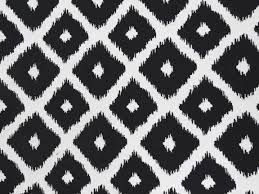
A bold geometric print adds weight and an edgy aesthetic to a room, but use judiciously!

A bold geometric print, used judiciously, adds weight and an edgy aesthetic to a room.

Speaking of mobile screens, these are another great option for dividing up a room to make it multi-purpose, or to get a little more privacy in your life. Folding screens are available at all kinds of furniture and interior design stores, and range from inexpensive to pricey, depending on your preference. They also range in size, colour, and material: you can find very tall ones that will divide an entire space, or shorter, smaller options which can work like blinders to keep you focused at your desk. If you need to tidy in a pinch, tossing all your flotsam and jetsam behind a folding screen is fast and effective, and makes you look like you have your life together, whether you do or not. They are also great because they are mobile and fold easily, making them a cinch to store if you change your mind about where you want them, or want to open up a space for an evening fête, for example.  They also work wonderfully well as make-shift dressing rooms and wardrobes. You can hang clothes on them, and dress behind them, the way Disney princesses do. Who doesn’t want a little more fancy in their lives? (You have to provide your own bird attendants. Most furniture doesn’t come with singing animal companions. Shame.)

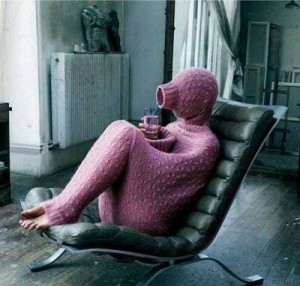
I woke up like this.

I woke up like this.

The point of all of this, Reader, is two-fold. Firstly, we have a lot more control over our spaces than we sometimes realise. We have choices. And secondly, fabrics are a lot more flexible, both literally and figuratively, than we often give them credit for. They can separate rooms while still allowing for change, for mobility, for alteration and interaction. Your spaces can be whatever you want them to be. You do you.

Till next time, Reader.

Yours,

Cotton Jenny.

Money/Laundering

Hello Reader.

It’s nearly laundry day at my house. Good old laundry day.

Despite the rhyme’s insistence that “Monday’s the washing, Tuesday’s the ironing, everybody’s happy, well I should say”, my laundry day is neither on Mondays, nor do I take great pleasure in it. It’s expensive, repetitive, awkward work, and sometimes has disastrous results (hello, red sock in the what-was-once-white-load).

But I didn’t come here just to complain. I came to bring tidings of great joy. There are ways to making laundry less painful. Get ready, Reader. It’s going to be a bumpy ride.

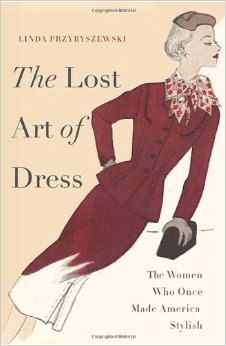
Firstly, you should know that most of these ideas come from two people. The first is a lady called Linda Przybyszewski, who wrote an excellent historical account/manifesto/call-to-arms/lament called The Lost Art of Dress. In it, she details the rise and fall of home economics in America, with lots of lovely pictures, sassy commentary, and helpful hints about how women of the past dealt with keeping squeaky clean. The second lady is my mother. I’m convinced that she knows everything. By the end of this, you likely will be convinced, too.

Now, Reader, some of these ideas might strike you as a little strange. Stay with me. There is method to the madness, but you have to stick it out.

1. Don’t wash your clothes. Okay, so you’re probably thinking to yourself, “She’s already jumped the shark”, but hear me out. We have a tendency,at the end of a long day, to throw everything we are wearing into the laundry hamper and call it a night. As tempting as this is, you may be doing more harm than help. Instead, washing only those clothes that are truly dirty (i.e. socks/pantyhose, underwear, undershirts and possibly bras), and hanging your pants, dress, shirt, skirt, sweater and other outer garments up does two wonderful things. The first is that it lessens the amount of laundry you do each week. It also keeps your outer wear in better shape. Washing even the sturdiest fabrics too much can cause the fibres to break down, which will result in faded, thin, worn fabrics. This process is only accelerated with more delicate materials.

2. Hang everything the minute it comes off your bod. I am terribly guilty of breaking this rule, but if you hang your clothes instead of letting gravity do the work, you won’t have to wash or iron as frequently, because your clothes won’t be wrinkled and dusty from time on the floor. There are also ways to up the ante when you hang your clothes. Textile sprays and refreshers are easy to use, but can be pricey, and sometime the scents and perfumes bother sensitive noses. Another option is to hang clothes outside. Lovely ladies of yesteryear hung their clothes in “airing cupboards”, which were fancy wardrobes, full of vents and little sachets of lavender, which would freshen up clothes and give them a pleasant floral aroma. Most of us do not have airing cupboards, but similar effects can be achieved by hanging clothes outside in pleasant weather, where the sun can work its magic on whites, or in doors in a storm. (My personal favourite spot is the bathroom, but if you have a laundry room, that works too.) Little sachets of herbs like lavender are still a great way to keep fabrics smelling fresh, whether you use them in a linen closet, or for just-worn clothes. An easy-to-come-by alternative is the dryer sheet: tuck it between bedsheets, towels, drawers, or attach to clothes hangers for laundry fresh-scent without the laundry. Weirdly, placing clothes in the freezer is an effective way to eliminate odours without washing: this method is excellent for that dry-clean-only blouse or jacket that still smells like the cedar chest from whence it came, or that cute but musty second-hand skirt.

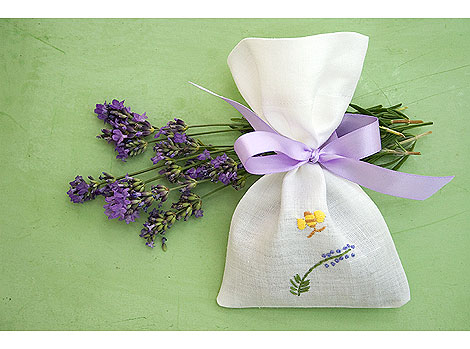
A lavender sachet

A lavender sachet

3. Steam is your friend. Hanging up clothes in the bathroom during or after a shower can help reduce stubborn wrinkles if you don’t have time for the full iron. Also, if you happen to have a straight iron, you can heat that baby up and use it to tame wrinkly shirt collars in a pinch, but be sure not to set it too high, especially if you are dealing with any synthetic fabrics. Too much heat will get rid of your wrinkles, but also melt your shirt. Not ideal.

4. Don’t put everything in the dryer. Dryers can be fast and effective at getting rid of moisture in fabric, (that’s their job), but they also have some negative side effects.They are notoriously unfriendly to the environment, producing all kinds of nasty green-house gases (older models are especially guilty of this.) One of the worst things about them, old or new, is their impact on certain types of fibres. Wool, silk, and many synthetics don’t play nicely with dryers. They shrink, warp, and in some cases, melt. Towels and bedsheets get along great in a dryer, but generally speaking, you can get away with hanging basically everything else. Hanging things to dry means never having to worry about shrinking your favourite sweater, or new pair of jeans. It means extending the life of your delicates and undergarments. It means clothes that smell like sunshine, without breaking the bank. And don’t we all need more (metaphorical) sunshine in our lives?

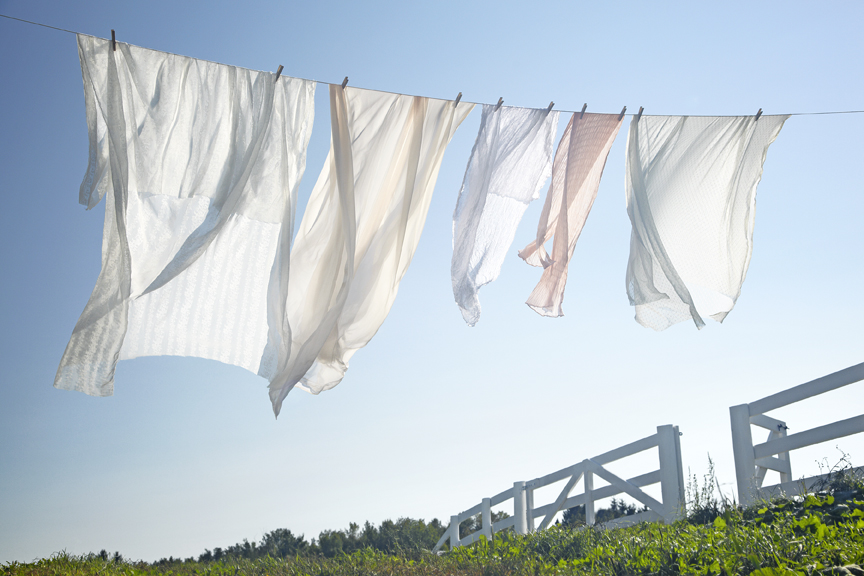
So pretty!

So pretty!

5.Speaking of delicates… Wash. Them. By. Hand. Now, when I say delicates, what I mean is bras and hosiery, but also sometimes workout gear and specialised garments. Basically, if it goes next to your skin, or your delicate bits, it is itself a delicate, and needs special attention, a nap schedule, and to be sung to sleep. (I’m kidding. Only sing to your underpants if you want.) Washing your lacy panties, bras, and pantyhose in the bathroom sink with a gentle detergent (baby soap is a great option) works beautifully. It prevents the elastic from heating and cooling too quickly. It also keeps your unmentionables from stretching. Best of all, it can keep your underwires, should you have them, where they belong: snug as a bug in the fabric of your bra, and NOT stabbing you in the rib-cage during that really important meeting. Wash and rinse them gently, and then lay them flat to dry on a towel draped flat over a clothes horse, or on any flat surface. Flat is key. Did I mention flat? Also, bras require a wash every two-to-three wears, so you don’t have to handwash constantly. Happy day!

Waiting for its next victim.

Waiting for its next victim.

6. Dealing with sweat. Look, guys. We all sweat. It’s a thing. We have to be okay with it. Unfortunately, our clothes do not. Human sweat is acidic, and that means that when it hangs out on your clothes, it denatures fibres, which is a fancy way of saying it sort of eats them. It also stains them. This is a problem. Human beings are going to sweat, and we’re not likely to stop wearing clothes any time soon, so we’ve got to figure out ways to combat sweat damage to our garments. Many deodorant and antiperspirant products promise to prevent sweat stains, but they are not always as effective as they claim, and many folks don’t much care for coating their pores with aluminium daily, so that’s often not the best option. Here is one instance where looking to the past can help us out in the future. Smarty-pants from days of old, before antiperspirant existed, made little crescent-moon-shaped pads out of cotton and batten (stuffing), which they then sewed into the underarms of their shirts and blouses. The little pads soaked up all manner of sweat, leaving clothes stain-free. At night, as they hung up their sweat-free clothes in their airing cupboards, these same geniuses simply took out the stitches holding the little pads in place, whereupon they could wash and dry them to be ready for another use. People had several pairs of these little pad bad boys, so they could wear a fresh pair daily. “But I don’t know how to sew, and some of my clothes don’t have sleeves!” I hear you cry, disheartened. Never fear, Reader. An alternative to the pad solution is to rinse the garments that you’ve sweated on throughout the day (most likely to be shirts and undershirts) and let them dry. This will wash away the worst of the sweat before it has time to hang out and get all acidic up in your clothes. If you’re looking for extra power, I’ve had good luck adding dish-drying liquid (the kind you put in a dish washer to help your dishes dry shiny and completely.) I’ve only tested it on white shirts, so be careful using it on coloured clothes.

7. Out, out, damned spot. Actually, generally speaking, rinsing out stains as soon as possible is usually a pretty good idea. Most natural fabrics (silk is sometimes excluded here) can get wet as long as you let them air dry. If you get barbeque, blueberries, or blood on your otherwise pristine white shirt, get thee straight to a can of soda water. Pour the water on the reverse side of the stain, and blot. Never, never never (never!) scrub. Unless you want the stain to get bigger, and more deeply entrenched in the fibres. Then, by all means, scrub away. Vinegar and baking soda can work well to lift stains out of fabrics, but be sure to rinse out the vinegar: it is acidic, and any residue can stain your clothes itself.

Bubbles at work to save the day!

Bubbles at work to save the day!

8. A Wrinkle in Time. Let’s say you’ve washed your clothes and hung them to dry, or are pulling your towels-and-sheets only load from the dryer. To keep your clothes from getting really wrinkled, fold them as soon as possible. You can usually get away with not ironing a lot of stuff if you fold it carefully the first time, and then zip it straight into its waiting drawer. I’m looking at you, socks, tee shirts, shorts, dish towels, and cotton undies.

9. Oh, sheet. Bed sheets are a pain. I’m still trying to figure out how to properly fold a fitted bed sheet, but here’s a handy tip. To keep all the pillow cases and sheets together, fold up everything except one pillow case, the way you normally would. Then slip that pretty pile of linens inside the pillow case. Voilá. You have a tidy, docile little pouch of bed-sheet goodness, ready to lie obediently in your linen closet, instead of getting all mixed up and bunched into a wad at the back of the shelf.

10. Seasons in the sun. If you happen to live in a climate which demands a wardrobe for each season, washing your clothes before you put them away can help to combat that musty smell when you take them out again, as can a judiciously placed dryer sheet or lavender sachet. It also keeps acidic stains from damaging your clothes over long periods of time. To get rid of the smell of mothballs (yuck!) or cedar, should you desire it, a quick trip to the outdoor clothes line or the freezer should do the trick.

I hope you found these ideas helpful, Reader. If you’re keen for more info on the laundry ladies or Dress Doctors of old, check out The Lost Art of Dress, and prepare to get inspired.

41K5Q2hwTZL._SY344_BO1,204,203,200_

Do you have any tips you have found helpful in the battle against endless laundry? Leave a comment below! I’d love to hear from you!

Yours,

Cotton Jenny

Ripping Yarns

Hello again Reader.

A few days ago, I was chatting with a friend about the Disney movie Hercules, and we remembered that the most awful scene of that whole film was when the three Fates (shudder) cut Meg’s life line. Little-girl me wasn’t a fan. But then, to be fair, there was nothing more vindicating than the following scene where there try to cut Hercules’ life thread, and their scissors won’t work, and the thread goes all gold, and the look on Hades’ face…

HERCULES, the three fates, 1997, (c)Buena Vista Pictures

HERCULES, the three fates, 1997, (c)Buena Vista Pictures

I digress.

But it got me thinking about the thread. And about Disney. Disney is well-known for adapting fairy-tales and myths for the screen, so it wasn’t a huge jump to go from the thread and scissors in Hercules, to the spinning wheel in Sleeping Beauty, for example. I was intrigued. Out came some list paper and a pen, and I started to hunt for other myths and fairy-tales that deal with or use fabric and textile tools to tell a story.

I was surprised at how much there was to find. A collection of fairy stories from the British Isles by Kevin Crossley-Holland, called The Magic Lands (which I highly recommend) brought forth stories like “Tom Tit Tot”, which is the British version of the classic German fairy tale, or Märchen, “Rumpelstiltskin”. In it, an imp or devil (Rumpelstiltskin means “little rattle shaker”) agrees to help a hapless girl in need by using his magical powers to spin for her, but at a cost. In some versions, he spins flax into gold: a handy skill to have. In other variations, he simply spins an enormous quantity of flax: five skeins a day was the amount given in the version I grew up on.

Sleeping Beauty, as I mentioned before, is another example of a widely known fairy tale which uses a textile tool as an important plot device. It struck me as odd, and a little disconcerting, Reader, that the very tool many women have used throughout European history as part of their livelihood would become the weapon that caused the main female character harm. It’s sort of a “live by the sword, die by the sword” situation, except that we recognise swords as purpose-made weapons. Spinning wheels are, I hope, not generally built to magically paralyse young women.

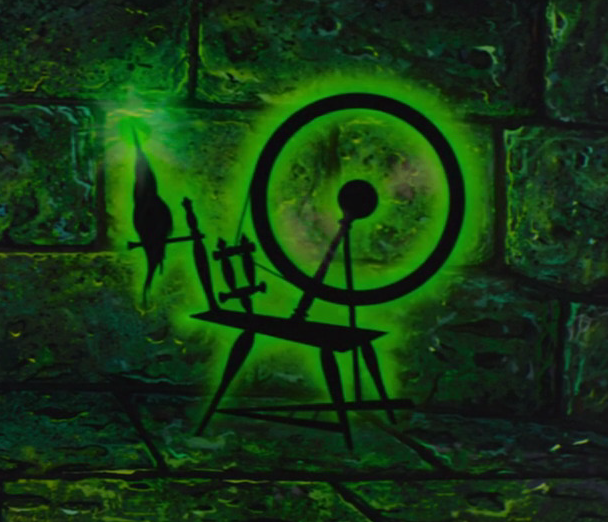
Yes, I'm looking for a spinning wheel with a ghostly green glow that will send me into a deep, nearly permanent, death-like sleep. Do you carry anything like that?

Yes, I’m looking for a spinning wheel with a ghostly green glow that will send me into a deep, nearly permanent, death-like sleep. Do you carry anything like that?

Speaking of women’s tools: as soon as you start searching for textiles in fairy tales, women crop up. And I mean everywhere. Weirdly, though, the same few types of women keep appearing. There’s the young, often pretty, girl who doesn’t know what she’s doing and gets herself into trouble, but rarely suffers terribly as a result of her ignorance (Little Red Riding Hood). There are really, really really old ladies: most are witches, and most witches are villains. There are some old, magical women, however, who are either neutral parties who watch the action but don’t take sides,, or sometimes are kindly and helpful, like the fairies in Sleeping Beauty.  Many stories feature mothers who either help their children (biological mothers) or are perfectly horrible(step-mothers); the kindly and shrewd mother in “Mossy-Coat”, which is a variation of Cinderella, makes her daughter a magical coat of moss, hence the name, and sends her out into the world to find her fortune, which she eventually does.

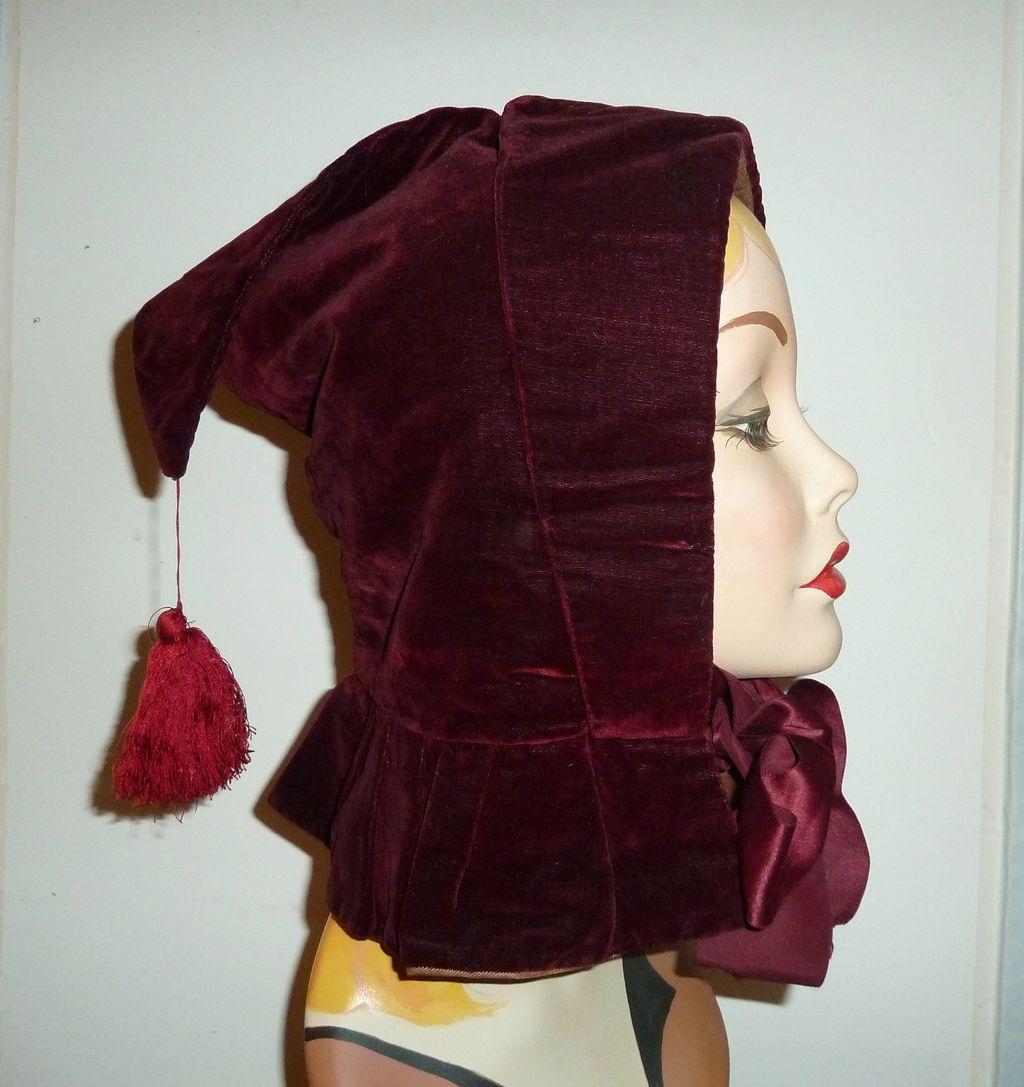
Have you also noticed, Reader, that many of the women we meet in myths and fairy stories get their names from the clothes they wear, or from their appearance? Little Red Riding Hood, Mossy-Coat, Cinderella, Snow White, Belle, and Sleeping Beauty are all named for what they look like and what they put on their bodies. Does that mean that Little Red Riding Hood, or Röttkappchen as she is known in the German original, doesn’t have a name if she’s not wearing her signature garment? By the way, despite popular depictions of this character, riding hoods are not capes. They are detached hoods, usually with a fastener for under the wearer’s chin. Riding hoods are a bit more like hats or bonnets than capes or cloaks. So while we often think of a little girl in a flowing red cape, what the original story-tellers might have actually imagined is quite different.

This is an example of a Victorian hood: certainly it is much later than the original story of Rottkappchen, but the Victorians were deeply interested in German fairy tales, thanks in part to their moralising qualities, and to the fact that their beloved Queen Victoria and Prince Consort Albert were German.

This is an example of a Victorian hood: certainly it is much later than the original story of Rottkappchen, but the Victorians were deeply interested in German fairy tales, thanks in part to their moralising qualities, and to the fact that their beloved Queen Victoria and Prince Consort Albert were German.

That’s not to say that men don’t come up in textile-based fairy stories. They do. Their roles are slightly different, though. They tend to work with textiles and fabrics professionally: tailors appear as main characters in many lesser-known fairy tales. A story taken again from Crossley-Holland based on an old tale called “The Wee Tailor” introduces us to the courageous tailor Billy, who takes his friends’ dare and assures them that “he’s not frit” to go and sew in the village graveyard at midnight. Of course, once settled upon a tombstone in the graveyard, Billy’s work is disturbed by malevolent phantoms and corpses, but he uses his wit and his sewing to escape unscathed.

Here we see, I think, an instance in which fairy tales can act as mirrors, showing us who we are even as we tell them. They tell us what we are afraid of: death, violence, pain, loss, and the unknown. They remind us of what we think is funny and important, and what evil looks like and how it acts. They show us how we value men and women differently. And I think, Reader, that they also indicate that our imaginations find the ties between textile metaphors and life too good to pass up. We like to think of life as a thread, measured out and then cut when the time is right. Thinking about the ways in which our life’s thread weaves with the threads of those around us into a tapestry is pleasing to us. And telling the stories that make up our lives, does seem remarkably like spinning a long, twisting, and sometime tangled, yarn.

On that note, Reader, here’s to long and bright life threads.

Yours,

Cotton Jenny

Anni Albers

Dear Reader;

I have a confession.

I was going to wait to write this post, to let the cat out of the bag, but I just can’t wait a second longer. Here goes.

I love Anni Albers. There. I said it. (Sigh.)

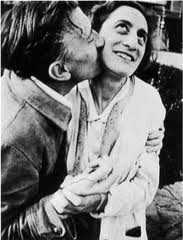
If you haven’t been introduced to Anni, allow me the pleasure: Anni, Reader; Reader, Anni. Isn’t she darling? Now we know everybody.

bauhaus bride

But seriously, if you’re new to Albers, there is no better time to join the fan-club. We meet right now.

Anni Albers was a German/American textile designer, author, jeweller, print-maker, and all-around awesome-pants. She was born in Berlin in 1899, and joined the Bauhaus School in 1922 as a young lady hell-bent on working in architecture or glass. Unfortunately for Anni, the 1920’s might have been many things, but they were not well-known for their stellar gender politics. Anni was re-directed to the weaving workshop, because it was considered appropriate work for women. A young lady like Anni could not handle, according to the teachers and administration at the Bauhaus, the challenges of working in architecture, or with glass. So off to the weaving workshop went Anni, thinking that weaving was “sissy”.

I’ll give you a few minutes to calm down, Reader. I know I’m fuming just thinking about the sillies at the Bauhaus who thought architecture was too hard for Anni. But I promise, the story gets better. Misogyny doesn’t win this time!

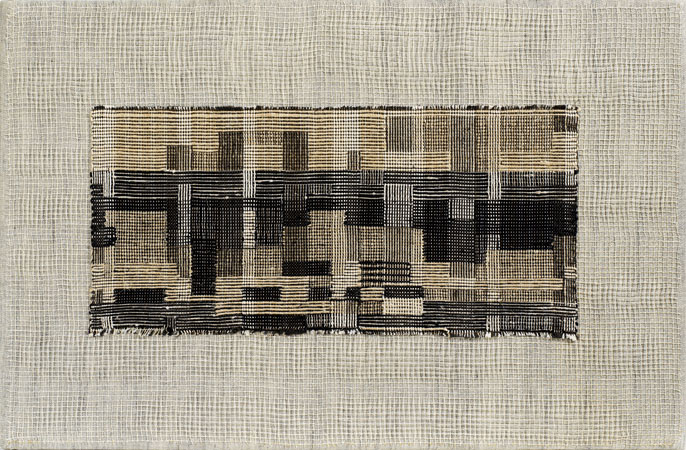
After a while, and with encouragement from her director, another super-cool Frau called Gunta Stölzl (“Shhtuhl-zull”), Anni started to dig weaving, and began to experiment with new materials and techniques. She developed a preference for double, triple, and quadruple weaves on a Jacquard loom. She used Cellophane, metallic thread, new industrial fibres, and mixed them with natural fibres like jute, hemp, linen, and cotton (which have been used for centuries) to create sound-absorbing, light-reflecting materials for industry and for interior design. I’ll repeat that: sound-absorbing. Light-reflecting. It boggles the mind.

2003-12-1

CIty, 1949. From the Albers Foundation

Well, Anni didn’t stop there. She also made jewelry out of bobby pins and washers and vegetable strainers,(!) and she was a great print-maker. Her prints were used by industrial companies like Knoll on their interior fabrics and upholstery. Anni was also a prolific author. She wrote two amazing books (On Weaving and On Designing, which I cannot recommend highly enough.) She also wrote articles for newspapers and journals which promoted the work she and her colleagues were doing at the Bauhaus.

jewelry_slide_09

Necklace, ca. 1940. Albers Foundation

In 1933, the National Socialist party (aka Nazis) decided that the Bauhaus was a degenerate school of art, and closed it down. Anni and her husband Josef, along with most of their colleagues, fled Germany. Anni and Josef ended up in America: first in South Carolina, and eventually in Connecticut.

Once in America, both she and Josef taught and lectured. She continued to design fabric for industry, and with her colleagues like Walter Gropius (who was the director at the Bauhaus when Anni joined in 1922.) She traveled to Mexico several times, and was inspired by weaving practices she saw there.

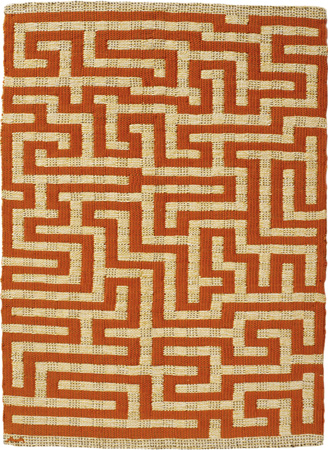
Red Meander. 1954. Albers Foundation

Red Meander. 1954. Albers Foundation

Anni worked tirelessly in several media until her death in 1994, in Orange, CT. Her textiles, and her writings about them, have gone on to influence fibre artists and textiles designers. She worked to marry ancient techniques and materials with modern, man-made fibres and tools to create distinct, functional and fascinating pieces.

Anni Albers designing in her Orange CT home. Albers Foundation.

Anni Albers designing in her Orange CT home. Albers Foundation.

Long story short: Anni is the coolest. Spread the news!

“But I want to know more about this fabulous lady and all her glorious work!”, I hear you cry. Well, dear Reader, look no further. I am here for you.

The Albers’ Foundation was started by the Albers (Josef and Anni). They have an amazing collection, most of which is available online, along with great articles and photographs. For more Anni and Josef goodness, check out the Albers’ Foundation website.

You can also check out her books On Weaving, and On Designing, which I will never get tired of recommending, and which are also both available on Amazon, and in preview on Google Books, and possibly at your local library.

Want to get your Anni fix in person? The Metropolitan Museum of Art and the Museum of Modern Art have considerable collections of Anni’s pieces for the next time you are in the Big Apple, and want some Anni Albers goodness to soothe your textile-hungry soul. The Bauhaus-Archiv in Berlin also has a few of her larger pieces, and also some of the weaving done by her colleagues from the weaving workshop. Take a look!

Well, Reader, that concludes our introduction to Anni. I’m looking forward to seeing you all at the next Anni Albers Appreciation Night (Every night. Every night is Anni Albers Appreciation Night. Be there or be square.)

Yours,

Cotton Jenny
Let’s Get Technical…

Hello again, Reader. Hoping this post finds you in good spirits, and yearning for learning!

As always, we begin at the beginning. What is a textile? What is a fabric?

Our trusty friend the dictionary tells us that fabrics are anything man-made, which a pretty broad category. Generally we say fabric and mean man-made, pliable, fibre-based materials which display tensile strength: they can be pulled and stretched and won’t ‘break.’ Textiles are just woven fabrics. Simple, right?

Well, yes and no. We throw these words around a lot, and use them interchangeably. For example: that cotton sundress is made of a (pretty darn cute) textile. The knitted sweater you throw over it, however, is not a textile: its a fabric.

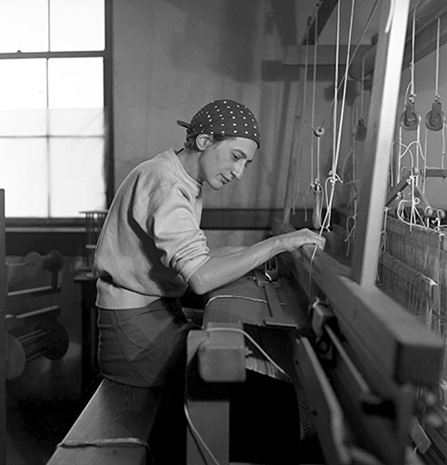
This may seem pedantic, and well, yes, it is. However, knowing about a fabric’s construction can help us make decisions about how to treat it. The startlingly wonderful Anni Albers reminds us that any fabric is mainly the result of two things: its fibres; and its construction. (As an aside, please, please, please check out her two big books On Weaving and On Design, or visit the Albers Foundation website to check out her work and her pretty photographs. Like this one.)

Albers in the weaving workshop at the Bauhaus school in Dessau. Image courtesy of Albers Foundation.

Albers in the weaving workshop at the Bauhaus school in Dessau. Image courtesy of Albers Foundation.

This means that we can have all kinds of variations on the types of fibres available to us. Natural fibres fall into two main categories: plant-based and animal-based. Man-made fibres get their own fancy categories. Ready for a list? I know I am!

Natural Man-Made
Plant Animal rayon
Flax/linen cashmere polyester
cotton angora nylon
Sisal alpaca spandex
Hemp silk acrylic
Jute mohair acetate
Bamboo wool saran

Now, this is obviously not an exhaustive list. (For more, check out Bernard P Corbman’s Textiles: Fiber to Fabric 1975) There’s all kinds of sub-categories and other variations on these fibres. And most of us can find fibre blends in the clothes we wear, which means there are even more potential combinations. That’s just one half of the equation. Our darling friend and mentor Anni tells us that the second part is a fabric’s construction. But what exactly does she mean by that?

Well, despite the fact that we don’t often think about fabrics as things that need building, that’s a pretty good metaphor for how fibres come together to make a fabric. All fabrics have a structure, which is developed by how the fibres interact with each other. Technical enough for you yet, Reader? Let’s look at some examples.

A single-weave textile will have stretch on a diagonal (called the bias), but be a bit more rigid if you stretch it top to bottom, or side to side, depending on how tightly it’s woven. That’s because the textile has one set of threads running top to bottom, and another set running side-to-side. These thread sets are interwoven with one another, and kind of ‘lock’ each other into place. This stiffness means we can usually cut a woven textile without ruining it. That fabric of cotton sundress we talked about earlier is probably made this way.

But now let’s consider that little cardigan. It’s knitted. Knitting is a process of linking a series of loops with one another to make a fabric. Because it is based on loops made from one long yarn, rather than straight linear threads, knitting produces fabric which tends to stretch in any direction. (Actually, the single looped yarn also make it possible to express hyperbolic geometry with knitting and crochet…but more on that later!) If you’ve ever ripped or snagged a wool sweater or scarf, you’ll know that cutting a straight-up knitted fabric is a good way to ruin it.

These are pretty obvious examples, but the principle applies to most fabrics. If you know of what the fabric is made, and how it was made, your chances of treating your fabrics properly, and keeping them in good condition, are much higher. And that can only be good news!

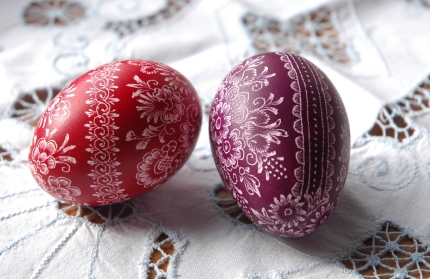
The other thing this information can tell us is what the best uses for our fabrics might be. We know that boiled wool is probably not the best for that sunny frock, but a cheerful and innocent-looking cotton batik (“bah-teek”) might also not be a good pick, despite its adorable pattern. That’s because batiks are dyed using a wax-negative process (sort of like Eastern-European Easter eggs), and the dye is applied to the surface of an already-woven cotton.iStock_000001376648XSmall

The threads are dyed in the fabric, not ‘in-the-wool.’ (Incidentally, that’s where that saying comes from.) A fabric whose dyes were added to the threads before the fabric was made is more likely to keep its colour and not fade, run, or bleed colour. A batik is dyed after the fabric has been woven, which means that the dye might be more likely to run or fade. This bad news for clothes, especially clothes for warm weather, unless you are keen on dyeing your skin with your pretty new dress. (No, me neither.)

modern-outdoor-fabric

Well, Reader, I’ll be darned if I’m not inspired to frolic through a fabric store, what with all this talk of batiks and cotton sundresses. Until next time, then!

Yours,

Cotton Jenny.

Welcome

Is there anything more anxiety-inducing to the writer than a blank page? Perhaps only a blank page accompanied by a blinking cursor, which seems to remind me, with every flash, of all the words I haven’t written yet. Spiteful little thing.

Well, I’ll show him.

Hello Reader.

I’m Cotton Jenny. Welcome to my blog.

This is where you can find, should you be looking, all things fabric. It is also a record of my own exploration through the world of textiles. Let me catch you up on my journey so far.

I started knitting with my Grandma Rose as a little girl. I inherited her ancient sewing machine, and used it to make my own (terrible) Hallowe’en costumes. Fast-forward several years, and I was finishing a crazy-quilt my other grandmother, Alice, never got to finish. Jump ahead another year or two, and there am I, hunting madly online for anything and everything textile.

Well, I found sewing blogs, and dress-making websites, and online stores where you could get knitting notions, and seamstress stuff, and pretty patterns, but my search for the kind of exhaustive, detail-focused, cross-referenced, obsessive online encyclopaedia of fabrics, the sort for which the art historian in me longed, was nowhere to be found.

Enter Cotton Jenny. I am an academic at heart (and in real life). So here you find me, in the present moment, starting what I hope will become a comprehensive and useful collection of articles, interviews, lists (squee! I LOVE lists) to help you, dear reader, in your own creative pursuits, or simply to whet your appetite for textiles, in all their glory. I can also promise links to other great and useful sources, both online and otherwise, as well as the odd textile-based joke and frequent poetic waxings. I can only apologise in advance for those.

I hope you’re all as excited, but not half so nervous, as I am to get properly stuck in.

With that, dear Reader, onward!

Yours,

Cotton Jenny